📌 Key Takeaways
Needles, lancets, and similar sharps waste need disposal methods built specifically to protect waste handlers and the public from injury and infection. Regular trash isn’t an option across most states, and household containers alone rarely meet the safety bar requirement. What follows covers what actually counts as sharps waste, the regulations that apply, and disposal methods that genuinely work- FDA-cleared containers through community take-back programs. This guide also explains how to dispose sharps waste safely and responsibly.
Sharps waste shows up in more homes than people expect, usually tied to a chronic condition requiring regular self-injections. Knowing how to dispose sharps waste correctly, rather than guessing or defaulting to the regular trash can, is the difference between a routine part of managing a health condition and a genuine safety hazard for everyone downstream. According to Mordor Intelligence, the sharps containers market was valued at USD 65.57 million in 2025 and is expected to reach USD 68.79 million in 2026. It is projected to grow to USD 87.42 million by 2031, representing a CAGR of 4.91% during 2026–2031.
Understanding Sharps Waste
Sharps waste refers to any medical device or instrument capable of puncturing or cutting the skin. Knowing how to dispose sharps waste starts with identifying which items qualify as sharps waste. Common examples include needles, lancets, syringes, and certain auto-injector pens, all of which are considered sharps medical waste when used in healthcare settings.
Households generate more of this than people realize. A few common sources:
- Daily insulin injections and blood glucose testing for diabetes management
- Allergy shots administered at home between clinic visits
- Blood thinner injections for certain cardiac or clotting conditions
- Fertility treatments requiring self-administered hormone injections
Over the course of a year, these routine medical treatments can generate a significant amount of sharps waste in households. For households that regularly generate sharps, understanding how to dispose sharps waste properly is essential.
Why Sharps Waste Carries Real Risk
A used needle can transmit bloodborne pathogens, including hepatitis B, hepatitis C, and HIV, among them, through accidental sticks. Sanitation workers can face this risk when used sharps are placed loose in regular trash bags. Family members run into it too, kids especially, reaching into a trash can without any idea what’s inside. Learning how to dispose sharps waste correctly can help prevent these unnecessary exposure risks.
Legal and Regulatory Considerations
Regulations around sharps disposal vary more than most people expect, and that inconsistency trips up plenty of well-meaning households.
Household sharps disposal rules vary by state and local jurisdiction, with some areas restricting disposal in regular trash or recycling. Before deciding how to dispose sharps waste, households should check the requirements that apply in their state and local area.
The other half allow it under specific conditions, usually requiring the sharps sit inside an approved, puncture-resistant container first. Neither approach means “toss it in loose,” though. Every state agency and the FDA agree on that much, at least.
What Federal Guidance Actually Says
The FDA recommends an FDA-cleared sharps disposal container whenever one’s available, since these are specifically designed and tested for puncture resistance. No cleared container on hand? A heavy-duty plastic container with a tight, puncture-resistant lid, or a laundry detergent bottle works fine and can serve as a temporary substitute. Glass containers and anything flimsy get explicitly discouraged, no matter how sturdy they might look sitting on a shelf. Following FDA guidance is an important part of knowing how to dispose sharps waste safely.
Safe Disposal Methods
There are several safe and legitimate methods for sharps waste disposal, and the most appropriate option depends largely on local regulations, available disposal facilities, and the amount of sharps waste a household generates.
- Sharps disposal containers, purpose-built and FDA-cleared, remain the gold standard. Fill one about three-quarters full, never to the brim, then seal it per the manufacturer’s instructions. Many pharmacies sell these directly, and some insurance plans cover the cost for patients managing chronic conditions.This is one of the most reliable options when learning how to dispose sharps waste at home.
- Mail-back programs work well for anyone without easy access to a drop-off location. A sealed, approved container ships to a licensed disposal facility, and several manufacturers bundle prepaid mailing into the container’s original price. For households without convenient drop-off locations, this can make it easier to understand how to dispose sharps waste properly.
- Community drop-off locations – hospitals, pharmacies, some fire stations – often accept sharps waste from residents through official sharps disposal programs coordinated with health departments. Availability shifts a lot by county, so checking ahead saves a wasted trip. Checking availability ahead of time helps you determine how to dispose sharps waste in accordance with local requirements.
- Home needle destruction devices exist too, less common but worth knowing about. These mechanically or chemically destroy needles at home, making them safe for regular trash where states permit it. Higher upfront cost than a simple container, but a reasonable option for households generating a lot of sharps waste.
Household Sharps Disposal Without a Purpose-Built Container
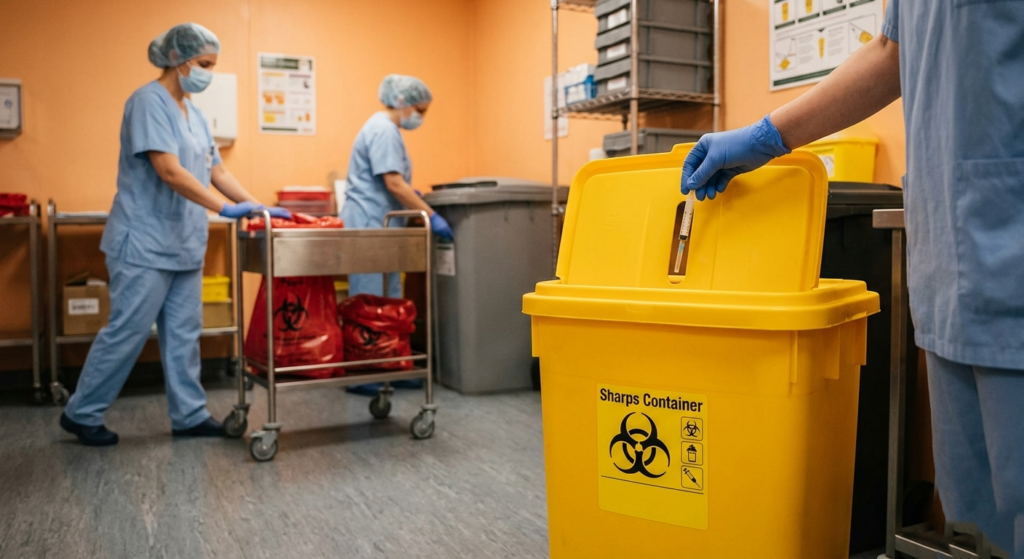
In a genuine pinch, a rigid, opaque plastic container with a screw-on or tightly secured lid can serve temporarily. Reinforce the lid with heavy tape once it’s full. Label it clearly, “sharps, do not recycle,” and get it to an approved drop-off point as soon as possible. Not a long-term fix, just a stopgap for when a proper container genuinely isn’t accessible yet. Knowing how to dispose sharps waste when an approved container is unavailable can help prevent people from making unsafe disposal choices.
Environmental Impact and Public Health
The risk from improperly discarded sharps doesn’t stay contained to the household that generated it. Loose needles in regular trash puncture bags during collection, and it’s sanitation workers who end up paying for that, exposure they never signed up for on the job. Understanding how to dispose sharps waste correctly also helps protect sanitation workers from preventable injuries.
Public spaces carry their own version of the same problem. A needle left in a park, on a sidewalk, in a public restroom, poses a real hazard to whoever stumbles onto it next, kids especially. Plenty of city health departments run cleanup programs aimed specifically at improperly discarded sharps, and that’s public money spent fixing something proper disposal would’ve avoided in the first place.
There’s a water angle too, one that gets less attention than it probably deserves. Sharps flushed down a toilet can damage wastewater treatment equipment, and in rare cases, they’ve turned up on beaches or in waterways. Safe needle disposal isn’t just about protecting the person doing the discarding – it reaches a lot further than that.
Dispose of Sharps Waste Safely and Responsibly
Handling sharps waste properly isn’t complicated once the right container and method are already in place. Skipping that step, tossing needles loose into regular trash, is where the real risk shows up, for sanitation workers, for families, for the broader community handling waste downstream. FDA-cleared containers, mail-back programs, community drop-off locations – legitimate options exist, and they’re more accessible than people assume. Following the appropriate disposal method helps protect everyone who may handle the waste after it leaves your home.
FAQs
What is sharps waste?
Sharps waste refers to used medical devices that can puncture or cut the skin, including needles, lancets, syringes, and certain auto-injector devices.
Why is proper sharps disposal important?
A discarded needle doesn’t stop being dangerous just because it’s in the trash. Accidental punctures can transmit bloodborne pathogens, and that risk lands on sanitation workers, family members, and the public alike.
How can I find local sharps disposal programs?
Start with your city or county health department’s website – most list nearby drop-off locations directly. Pharmacies and hospitals are worth calling too, since a lot of them participate in local sharps disposal programs.
Can I use household containers for sharps disposal?
Temporarily, yes. A rigid, puncture-resistant container with a tight lid gets the job done in a pinch. Long-term, though, that shouldn’t replace an actual approved sharps container.
What should I do if I find a discarded needle in a public place?
Don’t touch it. Call local sanitation or public health services instead and report where it is – most municipalities already have a process in place for collecting discarded sharps safely.
Why is MedCycle a trusted provider of sharps waste disposal services?
Compliance is the short answer. MedCycle handles sharps waste disposal for households and healthcare facilities alike, with collection and treatment that stays lined up with state and federal regulations from start to finish.