📌 Key Takeaways
Sharps waste management is essential for protecting healthcare workers, patients, waste handlers, and the public from needlestick injuries and potential exposure to infectious materials. Common sharps include needles, syringes, scalpels, lancets, and contaminated glass. Safe practices involve using puncture-resistant, leak-resistant containers placed close to where sharps are used, avoiding unnecessary recapping or needle manipulation, and replacing containers before they become overfilled. Proper sealing, transportation, treatment, and disposal should follow applicable regulations. Professional sharps disposal providers such as MedCycle can help healthcare facilities manage regulated sharps waste safely, efficiently, and responsibly.
Sharps waste management brings in a lot of responsibilities. All medical waste must be safely disposed of, not just from one facility. In a busy hospital or a small clinic, risks from improper sharps handling are the same. A single needlestick can change a life. It can expose workers to serious infections and lead to costly compliance issues.
That is why proper handling and disposal matter at every stage.
Sharps waste includes items that can puncture or cut the skin. These items often touch blood, bodily fluids, or other infectious materials. If not disposed of correctly, risks rise for healthcare workers, custodial staff, waste handlers, and the public.
Many facilities focus on patient care first. That actually makes sense. Still, safe sharps waste disposal deserves equal attention, like patient care. A complete sharps disposal box left unattended in a treatment room becomes hazardous to workers in no time.
Regardless of whether you are running a hospital, a dentist’s office, a lab, a veterinary center, or a tattoo parlor, adhering to the correct procedure keeps everybody safe. In case your establishment produces medical waste that requires regulation, working with a reputable firm such as MedCycle can make things simpler for you. Here, therefore, we discuss what you need to do.
Overview: Why Sharps Safety Matters
Sharps waste management is crucial for safety in healthcare. Hospitals, clinics, dental offices, and labs produce sharps waste every day. If not disposed of properly, it can cause injuries, infections, and compliance issues.
Examples of sharps are used needles, syringes, lancets, scalpels, and any other glassware that is contaminated. Sharps have the potential to lead to cuts on the skin and also have bloodborne pathogens in them. As such, they need to be disposed of correctly.
Sharps waste management includes the use of the right container and procedures for disposing of the sharps. It is also important to note that there are regulations at the state and federal levels. Working with MedCycle can help health facilities ensure their safety.
Correct sharps disposal procedures will reduce hazards.
Types of Sharps Waste
Understanding what belongs in a sharps container is the first step toward safer disposal.
Needles and Syringes
Needles constitute some of the most prevalent examples of sharp waste. They are routinely utilized by health professionals for administering shots, collecting blood, and delivering medicines to patients.
After being used, it is recommended that sharps, along with syringes, be immediately placed in designated sharps containers.
Scalpel Blades and Razors
Surgeries are associated with scalpels and blades. These instruments continue to pose dangers after being used only once.
Effective containment ensures safety from any injuries while handling and transporting the waste.
Lancets
Lancets are specialized tools that are employed for collecting blood samples. These are very common among medical facilities, laboratories, and diabetes patients.
The sharp nature of lancets poses considerable danger if not disposed of properly.
Contaminated Glass
Certain types of laboratory glassware qualify as sharps waste.
Examples include:
- Glass slides
- Cover slips
- Pipettes
- Broken, contaminated glass
Staff should never place these materials in standard trash containers.
Dental and Specialty Sharps
Dental wires, orthodontic devices, and other medical tools are also sharps. They can puncture or cut the skin.
Some sharps may have hazardous chemicals or radioactive materials. These need careful handling and disposal to ensure safety and meet regulations.
Understanding Sharps Container Use
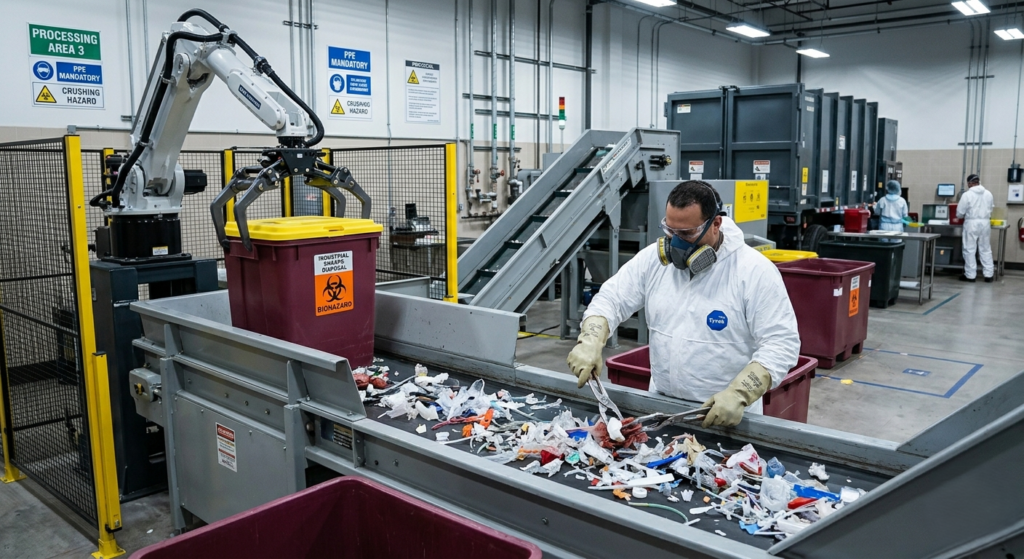
Sharps containment is one’s first line of defense against injury from sharps. Proper containment minimizes risks in the workplace and meets regulatory requirements.
What Makes a Sharps Container Safe?
Approved sharps containers should be:
- Puncture-resistant
- Leak-resistant
- Durable
- Clearly labeled
- Easy to close securely
Most standard containers are red and display a biohazard symbol for easy identification. Improvised containers should never be used. It is a prevalent practice to put needles into domestic waste receptacles, which may seem convenient but poses unnecessary hazards.
- Place Containers Close to the Point of Use
- Staff members must access the sharps containment right away when needed.
- Keep sharps containers near treatment, exam, and lab areas. This reduces the risk of needlestick injuries and promotes safer disposal.
- Follow the Three-Quarters Full Rule
- Overfilled containers create avoidable hazards.
- Once a container reaches about three-quarters of its capacity, staff should close and replace it.
Many injuries occur when workers try to force another item into an already full container. A simple daily inspection can help prevent that situation. To boost safety, facilities should review sharps disposal steps. This helps meet regulations and lower risks.
Best Practices for Safe Sharps Handling
Safe disposal starts long before waste reaches a collection vehicle. The habits staff follow every day make a significant difference.
Dispose of Sharps Immediately
Place sharps containers in proximity to where the procedures take place.
Sharps used for procedures need to be placed directly in the container following the procedure.
This makes it more hazardous than necessary, as the sharps can easily injure staff handling their disposal.
Avoid Altering Needles
Staff should never bend, break, or cut needles before disposal.
The entire device should go into the container as one unit whenever possible.
This reduces handling and lowers injury risk.
Limit Recapping
Needle recapping remains one of the leading causes of sharps injuries.
Whenever possible, avoid recapping altogether.
If recapping becomes necessary for a specific procedure, staff should use approved safety techniques.
Use Tools for Broken Glass
Contaminated broken glass requires special attention.
Never pick up broken pieces by hand.
Instead, use forceps, tongs, or a brush and dustpan to collect the material safely.
Train Employees Regularly
Policies alone do not prevent accidents.
Consistent training helps employees recognize risks and follow proper procedures.
Many healthcare facilities hold refresher sessions all year. These small investments can prevent bigger issues later.
How to Dispose of Sharps Containers
- Once a container reaches capacity, disposal becomes the next priority.
- Proper transportation and treatment are essential.
- Seal the Container Correctly
- Before removal, close the container according to the manufacturer’s instructions.
- A properly sealed container helps prevent spills and accidental exposure during transport.
- Use a Professional Disposal Provider. Most healthcare facilities rely on licensed waste management companies.
Professional providers collect, transport, treat, and document sharps medical waste according to applicable regulations. This process reduces administrative burdens and improves accountability.
Facilities throughout Texas often work with MedCycle for reliable sharps disposal services. Their team helps businesses maintain compliance while simplifying waste management operations.
If you need dedicated sharps disposal services, MedCycle offers flexible service options designed for facilities of all sizes.
Alternative Disposal Options
Certain communities offer additional disposal programs for small generators.
These may include:
- Pharmacy collection programs
- Community drop-off locations
- Mail-back services
- Household hazardous waste events
Availability varies by location, so facilities should always verify local requirements.
Why Professional Sharps Waste Management Matters
Sharps waste management involves more than just making sure the receptacles are located in easily accessible locations. The practice also requires proper disposal, staff training, audits, and safe handling. According to Reanin, the Sharp Waste Disposal Market was valued at USD 706.81 million in 2025 and is projected to reach USD 930.12 million by 2032, growing at a compound annual growth rate (CAGR) of 4.0% during the forecast period.
This is something that takes up quite some time. By relying on our team at MedCycle, you will ensure that everything is being done safely and effectively.
We work with different organizations, including hospitals, dentists’ offices, laboratories, veterinary facilities, and others who generate regulated medical waste.
Conclusion: Choosing a Reliable Sharps Waste Management Service
Sharps waste needs careful handling from when it’s created to its final disposal. Safe handling protects workers. Proper containment reduces injuries. Professional disposal supports compliance and public safety.
The best results come from consistent procedures and dependable service.
If your facility needs trusted medical waste management support, MedCycle provides practical solutions tailored to your operational needs. Their team helps businesses handle sharps waste safely while staying aligned with industry requirements.
A strong sharps waste program is not just about compliance. It is about protecting people every day.
FAQs
Are there eco-friendly disposal options for sharps waste?
Yes. Many disposal programs use reusable sharps container systems and advanced treatment methods that help reduce environmental impact.
Can sharps containers be recycled?
No. Used sharps containers can’t go into regular recycling. They might have biohazardous materials.
Why choose MedCycle for sharps waste management?
At MedCycle, we offer flexible and affordable sharps waste disposal solutions. Our team ensures OSHA and HIPAA compliance. We provide reliable collection and disposal services for facilities of all sizes. We help businesses manage sharps waste safely and efficiently.
Does MedCycle ensure eco-friendly sharps waste management?
Absolutely! MedCycle follows approved treatment and disposal processes that support responsible waste management and environmental protection.
What happens to sharps waste after collection?
Sharps waste usually gets treated by sterilization or safe destruction methods. After treatment, it can go through approved disposal routes. This method protects public health and promotes environmental care.
How often should sharps containers be checked in clinics?
The containers should be checked daily as part of the standard safety rounds. The containers should be sealed and replaced once they reach the 3/4 full mark.
What color are standard sharps containers usually?
The color usually depends on your location, local regulations, and the type of medical waste. Most standard sharp containers are red.