📌 Key Takeaways
Medical equipment disposal covers a lot more than tossing broken devices in a dumpster. Some equipment carries a biohazard risk. Some contain regulated materials, such as mercury or lithium batteries. Some just need proper data wiping before they leave the building. This guide breaks down why proper disposal matters, how to actually do it safely, and what regulations apply depending on the equipment type.
A retired hospital bed. A decommissioned ultrasound machine. A box of expired glucose monitors. None of it belongs in regular trash, and most facilities figure that out the hard way, usually after a compliance audit flags something nobody thought twice about.
Why Is Proper Medical Equipment Disposal Important?
Improper disposal creates risk on more fronts than people initially assume. Physical risk, first. Sharp or heavy equipment left in general waste can injure sanitation workers who never signed up for that kind of exposure. Biohazard risk comes next, as equipment that has come into contact with blood or bodily fluids can pose infection risks if it isn’t properly decontaminated and handled through Biohazard Waste Management procedures.
Then there’s the regulatory side. Medical equipment disposal regulations exist at federal, state, and sometimes local levels, and getting it wrong isn’t just an oversight. Fines follow. So does liability, in cases where improper disposal leads to injury or environmental contamination somewhere down the line.
Data Security Matters Too
Modern medical equipment, infusion pumps, imaging systems, and patient monitors often store protected health information locally. Wiping that data before disposal isn’t optional. HIPAA violations tied to improperly discarded equipment have resulted in real fines for healthcare facilities, and honestly, this gets overlooked more than almost anything else on this list.
How to Dispose of Medical Equipment Safely
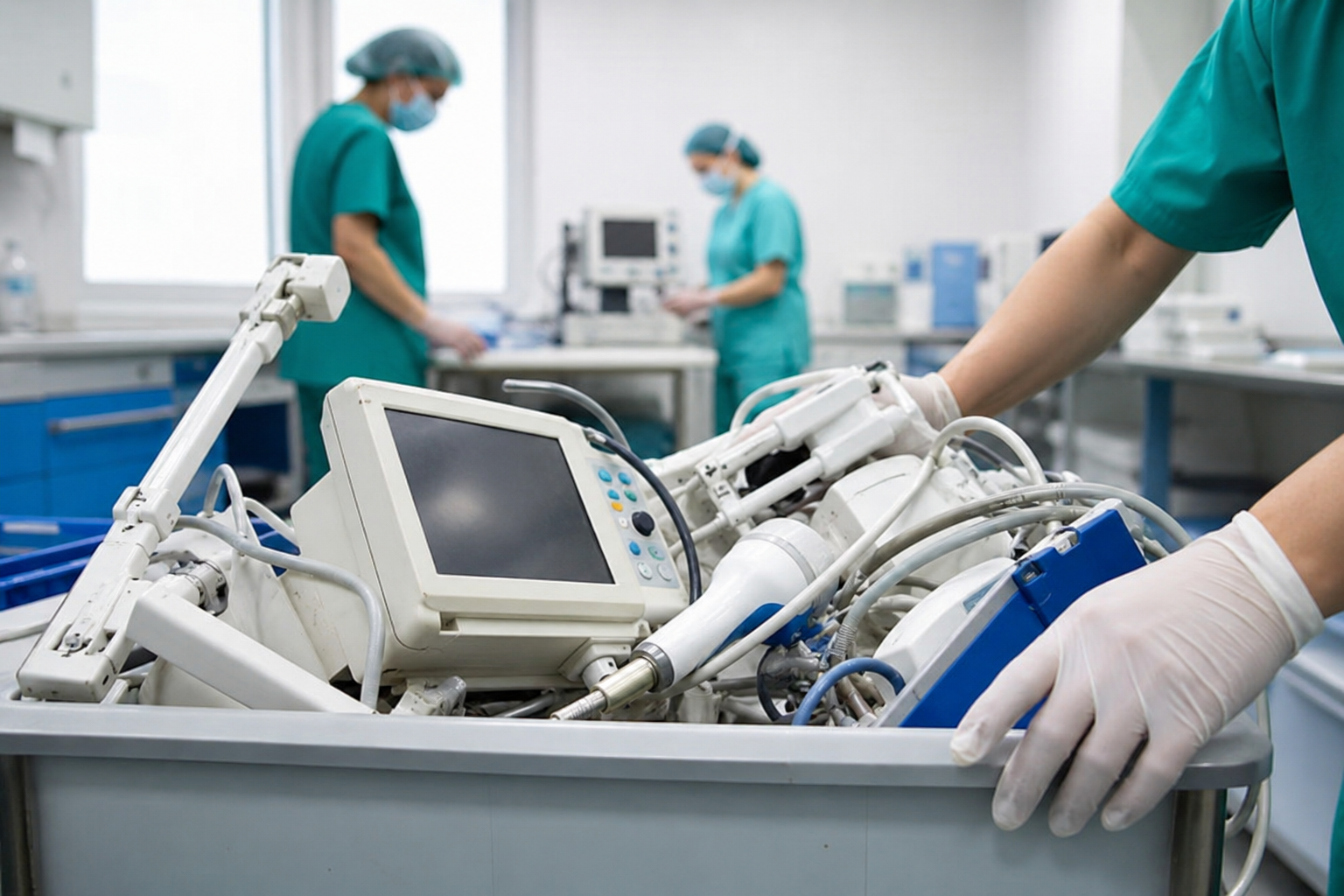
Disposing of used medical equipment properly follows a fairly consistent process, regardless of what the specific item actually is.
Start with an assessment. Working equipment might qualify for donation or resale rather than disposal outright, which is worth checking before assuming something’s headed for the scrap pile. Broken or obsolete equipment moves toward disposal, but even then, the path splits depending on what’s inside.
- Decontaminate first, always, for anything that’s had patient contact
- Remove or wipe any stored data from devices with memory or storage capacity
- Sort by material and hazard type: electronics, batteries, sharps, biohazard waste; each needs separate handling
- Use a licensed vendor for actual removal and disposal, not a general waste hauler
Working With a Disposal Partner
Most facilities end up partnering with a specialized vendor rather than managing every disposal stream internally. A good partner handles documentation too, including chain-of-custody records that prove equipment was disposed of properly, which matters enormously if a compliance question ever comes up later.
Types of Medical Equipment and Their Disposal Methods
Not every piece of equipment follows the same disposal path, and lumping everything together is where a lot of facilities run into trouble.
Electronic devices, monitors, imaging equipment, and infusion pumps typically go through e-waste recycling once data’s been wiped and any hazardous components identified. Batteries inside this equipment, especially lithium and lead-acid types, need separate handling entirely, since they’re flammable and can’t go through standard e-waste streams without proper sorting first. According to Strategic Market Research, the global medical waste management market is projected to grow steadily at a CAGR of 9.2%, rising from approximately USD 14.7 billion in 2024 to USD 24.93 billion by 2030.
Sharps and disposable items are treated as biohazard waste and require puncture-resistant containers, with incineration or autoclaving through a licensed medical waste service. Understanding biohazard disposal cost can also help facilities plan for proper handling and disposal. A medical waste shredder is sometimes used at this stage too, particularly for items that need to be rendered unrecognizable before final disposal, syringes and certain single-use devices especially.
Lab Equipment Disposal Specifics
Lab equipment disposal comes with its own wrinkle. Centrifuges, analyzers, and other lab instruments sometimes contain mercury, particularly older thermometers and certain older analyzer models. Mercury-containing equipment can’t go through standard e-waste channels. It needs dedicated hazardous waste handling, and mixing it into a general electronics recycling stream creates real environmental risk.
What to Do With Used Medical Equipment That Still Works
What to do with used medical equipment that’s functional but no longer needed comes down to a few solid options. Donation to clinics, veterinary practices, or international medical aid organizations extends the equipment’s useful life considerably. Some manufacturers also offer trade-in or buyback programs, particularly for larger imaging or diagnostic equipment, which can offset the cost of upgrading to newer models.
Medical Equipment Disposal Regulations and Compliance
Regulations layer on top of each other here, federal rules setting a baseline, states often adding stricter requirements on top.
The EPA regulates hazardous waste disposal broadly, covering items like mercury-containing equipment and certain batteries. OSHA’s bloodborne pathogens standard governs anything that comes into contact with blood or bodily fluids. State environmental agencies frequently add their own layer, and requirements shift enough between states that a facility operating in multiple locations really needs to track this carefully rather than assuming one policy covers everywhere.
Documentation Requirements
Proper disposal isn’t just about the physical act of getting rid of equipment. Documentation matters just as much. Chain-of-custody records, certificates of destruction for data-bearing devices, and hazardous waste manifests all create a paper trail that protects a facility if compliance ever gets questioned.
Conclusion: Safe and Responsible Medical Equipment Disposal
Medical equipment disposal isn’t complicated once a facility has a system in place, but skipping the process, tossing equipment in regular trash or handing it to an unlicensed hauler, creates real risk across safety, compliance, and data security all at once. Working with a licensed medical waste disposal company, documenting the process properly, and sorting equipment by actual hazard type rather than convenience helps protect everyone downstream, from sanitation workers to the facility’s own compliance record.
FAQs
Can medical equipment be recycled?
Yes. Electronics, metal parts, and some plastics can be recycled once the data is wiped and hazardous parts like batteries or mercury are taken out first.
Why shouldn’t medical equipment be placed in regular trash?
Regular trash isn’t built to handle biohazards, hazardous materials, or devices that still hold patient data. Throwing it away like normal garbage usually breaks state and federal rules too.
What safety measures should be followed during medical equipment disposal?
Clean the equipment first, wipe any stored data, sort items by hazard type, and use a licensed medical waste service instead of a regular trash hauler. All of this cuts down the risk.
Who is responsible for medical equipment disposal?
The facility that owns the equipment, whether that’s a hospital, clinic, or lab, is responsible for disposing of it properly. Most facilities work with a licensed vendor to handle the actual pickup and processing.
Why choose MedCycle for Medical Equipment Disposal?
MedCycle handles the whole process, wiping data, decontaminating equipment, transporting it, and disposing of it the right way. Facilities get proof it was all done properly, without having to manage every regulation themselves.