📌 Key Takeaways
Biohazard disposal costs vary based on waste volume, pickup frequency, waste type, facility location, and service agreements. Small clinics typically pay less, while hospitals and laboratories with higher waste volumes face greater costs. Hidden fees such as fuel, environmental, overage, and emergency pickup charges can also increase expenses. Facilities can reduce costs through proper waste segregation, choosing the right container size, reviewing pickup schedules, and comparing complete quotes. Most importantly, selecting a reliable, compliant disposal provider helps healthcare facilities maintain safety, meet regulations, and keep waste management costs predictable.
Unlike ordinary garbage, biohazardous waste comprises those things that may have pathogenic microorganisms or hazardous substances. In other words, used sharps, bloody dressings, laboratory cultures, and operating room waste all qualify as such. Such types of waste should be handled carefully and appropriately since their disposal incurs a lot of costs but helps to ensure the safety of the people involved and whole communities.
On average, the biohazard disposal cost depends on various factors. A small clinic may pay between $75 and $300 per month. Large hospitals usually dispose of their biohazardous waste, spending between 1,000 and over 50,000 dollars monthly due to their high generation of such waste. In addition, many suppliers provide the service for the cost of 30 cents to 85 cents per pound, depending on the waste category and service region. However, the figures may sound high. The problem is that the safe disposal of such waste is cheaper than legal penalties, workplace injuries, or outbreaks of diseases.
The CDC says that appropriate infection control measures have an important place in the prevention of healthcare-acquired infections. OSHA further states that employers must adhere to certain standards regarding bloodborne pathogens so that their employees do not come into contact with infectious materials. Safe waste disposal is not an option; it is part of good healthcare practice.
At MedCycle, we help healthcare organizations lower their costs by providing a range of options in terms of pricing and service. Oftentimes, getting a free quote is the first step. Let’s continue reading further to understand the factors that affect biohazard disposal cost.
Factors That Affect Biohazard Disposal Cost
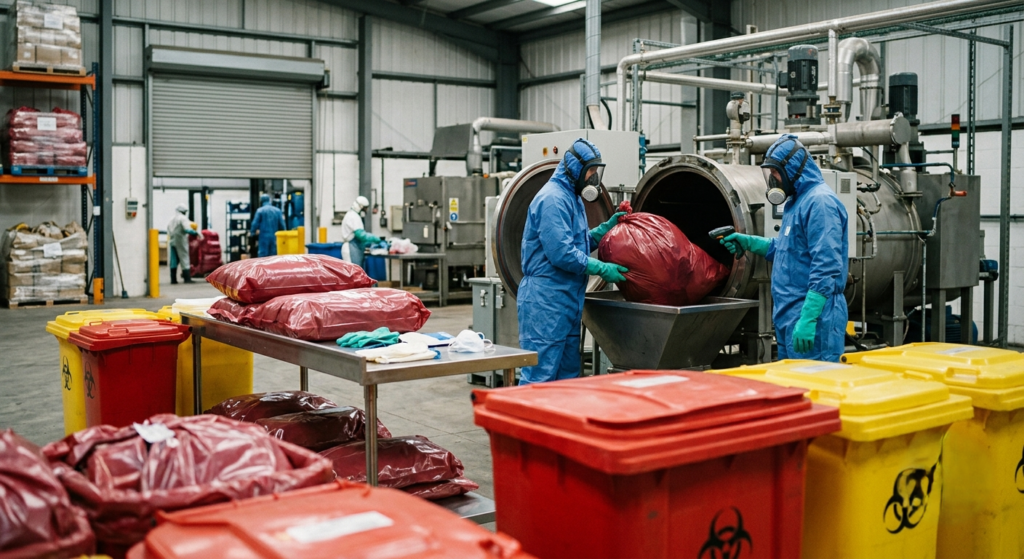
There will never be an identical quantity of waste that will be produced by different institutions. That is why there will be different prices for different customers. There are several aspects that influence the final invoice.
Waste Volume
The main factor affecting biohazard disposal cost is the volume of the waste. The bigger the volume, the bigger the container, the more transportation is needed, and the longer the treatment period.
Small offices usually will have 1-2 drums filled monthly. On the contrary, large hospitals will produce hundreds of pounds daily. In many cases, the providers prefer providing lower prices per pound for large volumes of waste.
A simple audit will show how much money can be saved. Many offices find non-hazardous waste mixed with red biohazard bags. It increases the biohazard disposal cost without any benefits.
Pickup Frequency
The collection schedules directly affect the monthly biohazard disposal cost. Weekly collection services are more expensive compared to monthly services since vehicles make more trips each month. Drivers, fuel, machinery, and labor will always be needed on each trip.
Some busy surgery centers need frequent collections to stay compliant. Small practices may only require monthly pickups.
Choosing the right schedule keeps waste moving safely while avoiding unnecessary service charges.
Type of Biohazard Waste
- All types of waste do not follow similar handling procedures.
- Sharps like needles require being handled in hard containers.
- Most blood-stained materials will undergo steam sterilization using an autoclave.
- Incineration will mostly be used to handle pathological waste because it does not allow steam sterilization.
- Chemotherapy waste also requires specialized destruction methods. These treatments increase biohazard disposal cost because they involve stricter safety procedures.
Facility Location
Distance matters. Urban facilities often pay less because collection routes cover many customers in one area.
Rural practices usually face higher transportation costs. Trucks travel farther and spend more time reaching each location. That leads to higher fuel and labor expenses.
Service Agreement
Some companies require long contracts with automatic renewals. Others offer flexible monthly service.
A lower starting price may look attractive. Hidden renewal clauses can increase the biohazard disposal cost over time.
MedCycle offers flexible service options that help practices adjust their pickup schedules as their needs change. That flexibility gives growing clinics better control over their budgets.
Average Biohazard Disposal Cost by Facility Type
Every healthcare facility creates different waste. That changes the average monthly biohazard disposal cost.
|
Facility Type |
Estimated Cost |
Unique Cost Factor |
|
Medical Clinics |
75 dollars to 200 dollars |
Red bag waste, gloves, sharps |
|
Dental Clinics |
50 dollars to 175 dollars |
Sharps, mercury-containing materials |
|
Veterinary Clinics |
75 dollars to 300 dollars |
Animal tissue, pharmaceuticals |
|
Laboratories |
200 dollars to 600 dollars |
Research samples, infectious materials |
|
Hospitals |
1,000 dollars to more than 50,000 dollars |
Mixed medical waste, chemotherapy waste |
|
Tattoo Studios |
50 dollars to 150 dollars |
Used needles and contaminated supplies |
Medical Clinics
An average quantity of infectious waste is created on a daily basis in medical clinics. The most common items are gloves, gauze, syringes, and small sharps. The monthly expenses will continue to rise with the increasing patient load.
Dental Clinics
There are certain characteristics of waste products created in dentists’ offices. Needles, blood-stained materials, and dental amalgam must be disposed of appropriately. There are special instruments that prevent mercury from entering water resources, which affects disposal costs.
Veterinary Clinics
Veterinary clinics produce two kinds of waste: medical and animal waste. Animal tissues, drugs, and sharps should have distinct ways of disposal.
Laboratories
Research laboratories involve the handling of dangerous biological material. Some laboratories work according to biosafety levels, requiring additional isolation procedures. Highly trained workers and advanced equipment increase disposal expenses.
Hospitals
Hospitals have the biggest amount of waste among other facilities. Waste production from emergency rooms, operating rooms, laboratories, and pharmacies all contribute to daily waste production. Some hospitals produce several tons each week. That explains why monthly disposal bills can exceed $50,000.
Tattoo Studios
Tattoo artists create smaller amounts of biohazard waste. Still, every used needle and contaminated wipe requires proper disposal. Safe handling protects both artists and customers.
Hidden Fees That Inflate Your Biohazard Disposal Cost
The monthly cost that is quoted is not always the total truth. Hidden fees can often lead to higher annual expenses than anticipated.
Fuel Charges
- Rates for transport services can be affected by increasing fuel rates.
- Most companies will have a monthly fuel rate fee that is charged.
- Always find out whether this fee is fixed or changes from time to time.
Environmental Fees
- Some companies charge environmental or regulatory fees. These costs help support compliance with state and federal requirements.
- Some may just use this fee as another source of income.
- Ensure you receive an explanation before agreeing to anything.
Overage Charges
- Containers have weight and fill limits. Overfilled bins create safety risks.
- Providers often charge extra when containers exceed those limits.
- Choosing the correct container size helps avoid these penalties.
Automatic Renewals
- Some long-term agreements renew without notice.
- Customers may remain locked into higher prices for another year.
- Reading every contract carefully protects both budgets and operations.
Emergency Pickup Fees
- Unforeseen spillages or increased amounts of trash may lead to immediate cleanups.
- Emergency cleanups may end up costing several hundred dollars compared to routine ones.
- Routine cleanups will ensure fewer emergency cleanup calls are made.
Businesses that value transparent pricing often avoid these surprises. MedCycle provides clear service options designed to help healthcare facilities understand every charge before work begins.
How to Compare Quotes and Reduce Your Biohazard Disposal Cost
Saving money does not mean choosing the cheapest provider. The real goal is finding the best value while keeping every employee and patient safe. A low price can become very expensive if important services are missing.
Perform a Waste Audit
One of the easiest and most effective ways to cut down disposal costs is to have a waste audit done.
On other occasions, workers may dump office waste such as paper towels, food packaging, or even office garbage in red bags meant for biohazards. This should not happen. Every unnecessary item increases the weight of regulated waste.
Studies show that many healthcare facilities throw away regular trash as biohazard waste. Proper segregation can reduce biohazard disposal cost considerably without affecting patient services.
Choose the Right Container Size
- Container size matters more than many people think.
- Large bins look convenient. But paying for space wastes money every month.
- Small containers may require extra pickups if they fill too quickly.
- The best choice matches the amount of waste your facility creates. Many disposal providers will help estimate the proper container size before service begins.
Review Pickup Frequency
- Every pickup adds transportation and labor costs.
- Some busy hospitals need weekly collection because they generate large amounts of waste every day.
- Many physician offices only need monthly service.
- Reviewing pickup schedules every few months helps prevent paying for unnecessary visits. That leads to lower operating costs without reducing safety.
Compare More Than the Monthly Price
- A quote should include every expected charge.
- Look carefully for fuel costs, environmental fees, container rental fees, emergency service charges, and contract renewal terms.
- Instead, having slightly higher monthly costs could be cheaper in some years once the extra charges disappear.
- Always remember to inquire with your service providers about their pricing plans.
Check Experience and Compliance
- Experience matters more than anything.
- The licensed disposal company knows the requirements of federal and state laws. They also provide important documents that prove waste was treated correctly.
- These records protect healthcare facilities during inspections and audits.
MedCycle works with healthcare providers across Texas by offering transparent pricing and flexible service options. Requesting a free quote is a smart way to compare costs without any pressure.
Making Informed Decisions About Biohazard Disposal Cost
Disposal of biohazardous waste is not just about transporting the waste from point A to point B. All containers will provide protection for the healthcare staff, the patients, the sanitation workers, and local communities.
The cost of safe disposal of biomedical waste is based on the amount of the waste that is generated, the schedule of pickups, methods of treatment, transportation, and the terms of the contract. This knowledge can be used by the facility for budgeting.
But here is the key factor. The lowest price is not always the best choice.
Work with firms that follow the OSHA recommendations and those that are not willing to endanger your health. Infection control is highly recommended by the CDC to prevent disease transmission in healthcare institutions. Waste management will help you achieve both aims.
Choosing an experienced provider also creates peace of mind. Staff members can focus on caring for patients instead of worrying about waste handling requirements.
If you’ve already made your decision, let MedCycle be the partner for that decision. We assist healthcare facilities in streamlining their processes of biohazard disposal through reliable services, convenient scheduling, and transparent pricing. Regardless of whether you require regular services or same-day collection, our experts will take care of everything. Our custom plans are made to simplify your already complicated methods. Make compliance easier and budgeting more predictable with us.
Reach out to our experts and get your quote for free. It’s safe for all and cost-effective too! Get in touch today!
Frequently Asked Questions
How much does biohazardous waste pickup typically cost per month?
Medical waste disposal prices normally range between $30 and $150 per month for smaller clinics depending on how much waste is produced, pickup frequency, geographic area, and container sizes. More established facilities, as well as those producing larger quantities of regulated waste, usually incur higher charges. It is wise to ask for a personalized quote.
How often should biohazard medical waste be picked up?
The schedule depends on waste volume and local regulations. Some facilities require weekly pickups. Others only need monthly service. A disposal provider can recommend the safest schedule based on daily operations.
How can MedCycle help small practices lower their biohazard disposal costs?
Through MedCycle, small healthcare facilities can minimize their spending on hazardous waste removal by offering customized waste management services depending on the volume and requirements of the healthcare facility. The provision of appropriately sized containers, along with pick-up services according to the schedule, will ensure that unnecessary spending is minimized without compromising the rules and regulations.
Does MedCycle offer flexible pickup schedules for biohazardous waste pickup?
Absolutely! The MedCycle team provides flexible biohazardous waste collection schedule options according to individual facility requirements. We offer flexible service packages, which include regular pickups, same-day collection, and on-demand pickups for facilities with fluctuating volumes of medical waste. Such a variety of flexible service packages will be helpful for businesses to comply with safety regulations and remain effective.
What types of waste are considered biohazard medical waste?
Biohazard medical wastes are those wastes that are contaminated with blood, bodily fluids, or microorganisms. Examples of such waste include used needles, syringes, blood-contaminated dressings, surgical gloves, laboratory cultures, and pathological wastes. Contaminated personal protective equipment (PPE) and some diagnostic samples also fall under this category. Such wastes require proper management to prevent any infections from taking place.
Can biohazard waste be disposed of in regular trash?
No! Biohazard waste should never be disposed of in normal garbage since it is composed of infectious waste, which is harmful to your health. This waste should be disposed of using proper biohazard disposal container based on local regulation guidelines. The only waste that should be thrown away in normal garbage is noninfectious household waste.
How do I choose a reliable biohazard waste disposal company?
Step one will involve finding a company with an authentic license and proper insurance. You can check what services the companies offer, their regulatory expertise, and whether they give estimates. You should also check the customer support offered through testimonials. Get a comprehensive quote that outlines all the fees involved before entering into any contract with the company.