📌 Key Takeaways
Dental waste management involves more than simply removing trash from a clinic. This blog explains the main categories of dental waste, including general, infectious, sharps, chemical, pharmaceutical, and mercury-containing amalgam waste, each requiring different handling methods. Proper segregation, color-coded containers, labeling, secure storage, and compliant transportation help prevent injuries, infections, chemical exposure, and environmental contamination. The article also emphasizes regular staff training, documented waste-management procedures, regulatory compliance, and recordkeeping. Working with an authorized disposal provider such as MedCycle can further simplify collection and treatment while helping dental practices maintain safer and more consistent waste-management practices.
Dental waste disposal guidelines for materials are crucial because they ensure the safety of health workers as well as the patients receiving treatment at dental clinics. There are various materials produced during work in dental offices that may cause hazards when not adequately managed. These include contaminated medical devices, hazardous chemicals, sharp tools, pharmaceutical agents, and many others. The improper disposal of dental waste and a lack of focus on minimizing dental waste may lead to the spread of diseases caused by infectious agents and harmful chemicals, while also contributing to environmental pollution.
By introducing dental waste disposal of materials, safety for dental workers as well as patients can be achieved, since it enables one to separate hazardous materials, apply labels, and dispose of them according to the recommendations of relevant agencies. Following dental waste disposal guidelines also helps dental clinics maintain regulatory compliance and improve workplace safety.
Types of Dental Waste
In order to dispose of dental waste properly, it is important to understand the different types and peculiarities of those materials. Understanding dental waste disposal guidelines makes it easier to classify waste correctly. There are several types of dental waste, such as:
General Waste
General waste consists of objects that have not been in contact with bodily fluids like saliva, blood, or anything else that does not have biological waste contamination. This includes paper towels, packaging, and food items.
Infectious/Dental Biohazard Waste
Biohazard dental waste includes items that have been in contact with body fluids. Examples include gloves, gauze, cotton rolls, tissue products, and more. Such items are highly likely to result in infections if they enter other areas. Dental waste disposal guidelines require biohazard waste to be separated and handled with appropriate precautions.
Sharps Waste
Sharp dental waste refers to any sharp dental tools that could lead to injuries to individuals. This includes needles, blades, orthodontic wires, and other instruments that could lead to punctures. Dental waste disposal guidelines recommend placing all sharps immediately into puncture-resistant containers.
Chemical Waste
Chemical waste involves items like disinfectants, sterilization agents, X-ray chemicals, and cleaning chemicals, among other hazardous materials. These items are highly hazardous to the environment and humans. Following dental waste disposal guidelines minimizes the environmental risks associated with hazardous chemicals.
Pharmaceutical Wastes
The pharmaceutical waste includes expired and unused pharmaceuticals like anesthesia, antibiotics, and any other dental pharmaceuticals. They must not be thrown down the sink or general waste bin because they might end up polluting water sources.
Mercury Amalgam Waste
The disposal of amalgam wastes requires great care since amalgam dentistry entails mercury. The amalgam wastes include scraps of amalgam, expired amalgam capsules, and teeth that have amalgam fillings, which may harm people and the environment, according to a published study. It ensures that the mercury is not released into the environment. Dental waste disposal guidelines emphasize the proper collection and recycling of mercury-containing amalgam waste.
Principles of Waste Management in Dental Clinics
Effective dental clinical waste disposal in dental clinics involves the proper handling and disposal of hazardous waste in accordance with regulations. Here are a few ways to make dental clinics safe. Implementing dental waste disposal guidelines across all procedures helps maintain a safe clinical environment.
Segregation of Waste
Waste segregation is crucial since it ensures there is no contamination. It helps ensure that proper waste handling and disposal measures have been implemented.
Use of Waste Segregation Bins Using the Color Code System
Color-coded bins aid in differentiating between various types of waste. Bio-hazardous waste should be stored in yellow bins, and sharps in puncture-proof containers.
Storage and Labeling Measures of Waste
Waste storage should take place in isolated rooms away from dental treatment areas. Proper labeling of hazards ensures safety during waste transport and disposal.
Methods of Transport and Disposal of Clinic Wastes
Licensed firms dispose of wastes through transportation in accordance with legal requirements. Many methods, such as sterilization, incineration, and recycling, are used in waste treatment. These methods should always align with dental waste disposal guidelines and regulators.
Waste Management Practices in Dental Clinics
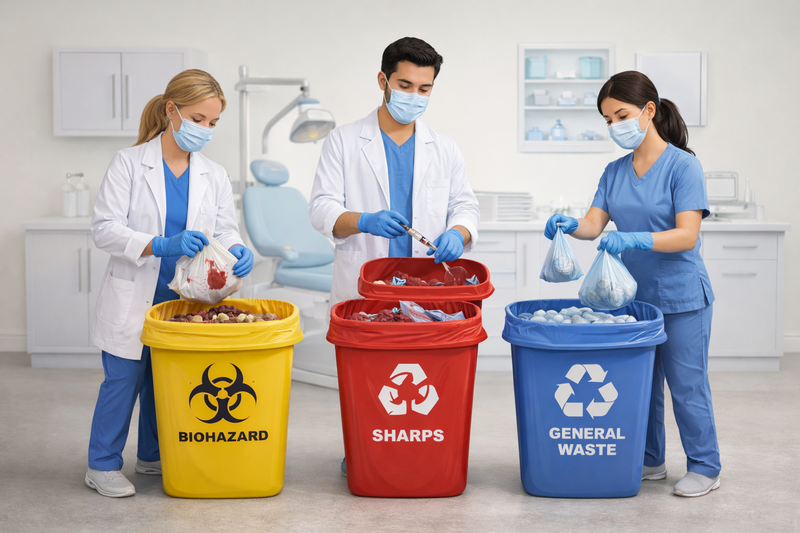
Dental waste management practices help clinics become consistent and compliant.
Implementing Waste Management Strategies in Dentistry
Dental facilities must document clear dental waste management strategies, including proper waste segregation, handling, and disposal procedures. These documents should be easily accessible to all employees to ensure dental waste disposal guidelines compliance.
Training Employees
Regular employee training will allow them to understand various types of waste, waste segregation, and the appropriate methods of waste management. Training should also include updates to dental waste disposal guidelines whenever regulations change.
Conformity to Regulations Regarding Biomedical Waste
It is important for dental clinics to conform to the set guidelines by the local authorities on waste management. This will protect them from being sued.
Documenting Waste Disposal Activities
It is important to document all waste management activities in a dental facility so that they can be held accountable.
Techniques of Dental Waste Management in Clinics
Waste management techniques have to be applied in a dental clinic in order to achieve compliance.
Application of Dental Waste Management Techniques
Dental clinics must implement techniques for segregating, managing, and disposing of wastes. They should document these practices and make them available to all employees.
Training of Dental Staff
Regular training of dental staff facilitates their ability to understand various waste materials, classifications, and their respective management techniques, which is helpful in complaince of dental waste disposal guidelines.
Adherence to Laws on Biomedical Waste Management
Dental clinics need to comply with dental waste disposal guidelines & laws concerning biomedical waste management as stipulated by local governments and authorities.
Documentation of Waste Disposal Process
It is necessary to keep records in relation to the waste disposal process and training.
Conclusion
It goes without saying that proper dental waste management requires considerable consideration. Whether it is a large or small clinic, the waste generated there needs to be disposed of safely. Inappropriate management will have repercussions that go beyond legal ramifications; for instance, injuries to the staff and patients may occur. Moreover, the environment around the clinic could also suffer the negative effects of poorly managed waste.
Nevertheless, it would be fair to say that everything described here is not too difficult to handle, provided the right measures are taken. The use of appropriate containers, training of personnel, and hiring of an authorized agency for the disposal process are some steps that will make waste management easy. In addition, one should remember to monitor their waste disposal procedures periodically by reviewing their records. Following dental waste disposal guidelines consistently ensures long-term compliance and protects both people and the environment.
Ultimately, effective waste management demonstrates the general level of responsibility a dentist or clinic owner shows. After all, if one pays due attention to patient safety and infection control within the facility, there is no reason to neglect these issues during the disposal process.
Frequently Asked Questions
What happens when dental waste is not disposed of correctly?
When dental waste is not disposed of correctly, there could be instances of infection, contamination, and even legal trouble for you. Hazardous substances could affect people handling your dental waste and could even contaminate water sources.
How do we segregate our dental waste before disposal?
There are six types of dental waste, namely: general waste, dental biohazard waste, sharps, chemical waste, pharmaceutical waste, and amalgam waste.
What type of training do I need regarding dental waste management?
The training that you need includes proper segregation of waste, proper handling of sharps and chemical waste, proper spill response, and being compliant with the law.
How often does MedCycle collect my dental waste?
Depending on your waste generation rate and regulations, you could have your dental waste picked up either weekly or bi-weekly.
Why should I use MedCycle for my dental waste requirements?
MedCycle helps you dispose of your dental waste properly and effectively; they pick up your waste and manage it professionally.