📌 Key Takeaways
Effective dental waste management is essential for protecting patients, staff, communities, and the environment. Dental offices generate various waste types, including sharps, amalgam and mercury, lead, pharmaceutical waste, and regulated medical waste, each requiring proper segregation and disposal. Using color-coded bins, amalgam separators, appropriate containers, recycling practices, and digital technologies can improve safety, compliance, and cost efficiency. Clinics should follow applicable EPA and OSHA guidelines, maintain proper waste management plans, and work with reliable disposal providers. MedCycle can support dental practices with compliant waste handling, collection, tracking, and disposal services.
Did you know that your local dental office is more than just a place to get a bright smile? It is actually on the front line, protecting our planet! While all medical waste is hazardous to the environment and must be handled carefully, dental waste management strategies are among the most important practices that require extra care.
The total waste collected from a dental clinic includes contaminated sharps, chemical agents, toxic materials, and more. While most of this waste can be labelled as general waste, there is a small part that is very dangerous for our environment. This hazardous waste includes mercury and amalgam waste that must be disposed of, adhering to regulatory standards that protect the environment, staff, and patients.
Even the American Dental Association, along with OSHA, HIPAA, and EPA, all enforce various guidelines on medical waste management, typically on how to handle regulated medical waste (RMW). Following those guidelines, Medcycle LLC has developed comprehensive dental waste disposal services across the Texas region.
Different Types of Dental Waste
In a dental office, not all trash is created equal. There are objects that can be labelled regular, whereas some materials are super-special. All of them require a different set of disposal techniques, which is why segregation is an important part of dental waste management strategies and an essential step in effective dental clinical waste disposal.
|
Type of Waste |
Why it’s Special |
|
Amalgam & Mercury |
|
|
X-Ray Fixer |
|
|
Lead (Foil & Aprons) |
|
|
Regulated Medical Waste |
|
|
Pharmaceutical Waste |
|
The World Health Organization (WHO) observed that almost 85% of healthcare waste is non-hazardous. However, the remaining 15% poses severe environmental, health, and legal risks if mismanaged. By following the dental waste disposal guidelines and minimizing dental waste, clinics prevent germs and poisons from ever leaving the office.
Dental Waste Management Strategies Every Clinic Should Follow
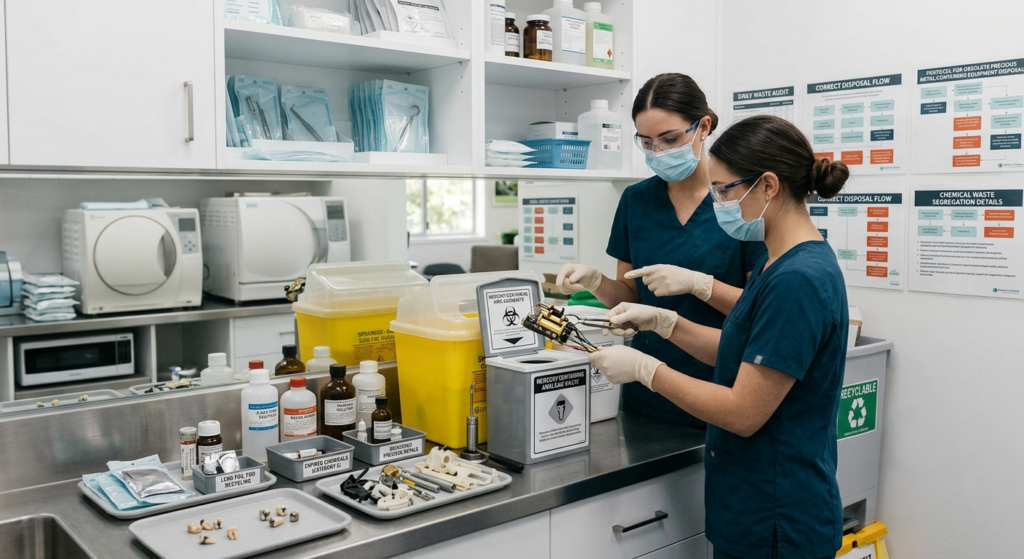
Top-tier dental clinics don’t just guess where trash goes-they use a high-tech game plan. Research shows that when Earth-Savers follow a formal plan, the office runs better and actually saves money.
Doing waste management right isn’t just good for the planet—it’s excellent for your budget. A study found a nearly perfect connection between following environmental rules, keeping the environment safe, and saving money.
The Four-Part Strategy
- Segregation of Collected Waste: This is the most important step! Using color-coded dental bins ensures that “scary” hazardous waste never mixes with “safe” general trash.
- The Amalgam Separator: Amalgam waste disposal is one of the most critical steps in dental clinical waste disposal and plays an essential role in effective dental waste management. The Dental Effluent Guidelines made by the EPA require every office to utilize a powerful special filter called a separator that catches 95% amalgam particles before it reaches the water! When the filter is full, the whole unit is sent back in a prepaid shipping kit to be recycled.
- SAFETY WARNING: Never use bleach or chlorine cleansers to clean your vacuum lines! Bleach acts like a magnet that pulls mercury out of the particles and dissolves it into the water. Only use “Safe Vacuum Cleansers” like Biocide or Cavicide.
- The Lead & Silver Rule: Recycle lead foil and aprons instead of tossing them in the bin. We also clean the P-traps—the “elbows” of the sink pipes where heavy silver and mercury bits like to hide and take a nap.
- Pharmaceutical Waste Rule: Non-hazardous dental pharmaceutical waste consisting of partially used local anesthetic carpules, expired emergency kit medications, and IV bags containing residual drugs must be incinerated after collection.
By being a “Good Neighbor” and “Following the Rules,” clinics naturally become more successful and save money on fines and disposal fees!
Choosing the Right Dental Bins for Different Types of Dental Waste
Dental bins are the tool that allows different types of dental waste to be collected in their appropriate treatment containers, saving time and effort of manual segregation. Using the right bin type ensures that healthcare workers and the facility remain safe for proper usage.
- Red Biohazard Bags: Red dental bins must be used for items soaked in blood or germs. If the item drips blood or other liquid upon squeezing, it belongs here!
- Sharp Containers: Sharp tools like needles, scalpel, and dental wires require puncture-proof boxes that cannot be poked with sharp objects.
- Contact Amalgam Jars: Amalgam waste must only be taken through tightly closed, labeled jars for teeth with silver fillings or bits of scrap metal.
- Black/General Bins: For sale stuff, like paper towels and wrappers, black general bins shall be used.
The dangerous lane here is mixing these dental bins up. Putting mercury in a sharp container makes the whole process dangerous for the workers who pick up the trash.
How Technology Improves Dental Waste Management
With the latest advancements in technology, our local dentists are also transforming their clinics into “Green Machines.”
- Digital X-rays: By taking pictures on a computer, we completely stop making “silver waste” and “fixer chemicals.”
- Digital Records: Computers save huge mountains of paper and the trees they come from!.
- Tracking Systems: Clinics use e-Manifests (digital tracking) to track every bag of waste. This ensures it gets to a safe treatment facility without a single piece of paper being lost.
These tools and advancements lower a clinic’s carbon footprint. Because we aren’t shipping heavy chemicals or storing giant piles of paper, the office uses less energy and becomes a friendlier neighbor to the Earth.
Conclusion: Build a Safer Future with Dental Waste Management
Being careful with waste disposal is a sign of a great dental team that cares about its patients and the planet. After all, thoughtful waste management is no longer just a nice idea, but a moral, ethical, and legal imperative to protect the environment and every organism living in it. Partnering with a reliable medical waste disposal company can further help ensure that dental waste is handled safely, responsibly, and in compliance with applicable regulations.
When we follow the best dental waste management strategies, we aren’t just following rules; we are building a cleaner world. Staying compliant is a win-win that leads to long-term cost savings and a healthy environment for everyone!
Frequently Asked Questions
Why are dental bins important in waste management?
Dental bins and specialized waste containers are used to keep hazardous trash away from the “safe” general trash. This is a vital component of dental waste management strategies that serves to protect people, ensure legal compliance, and minimize environmental impact.
How can dental clinics focus on minimizing dental waste?
Dental clinics can transform their office with digital tools (like X-rays) and always recycle materials like lead foil and silver. They can also save up on general waste by maintaining digital records in place of paper records.
What is the proper process for dental waste disposal?
Follow the dental effluent guidelines released by the Environmental Protection Agency for dental waste management, and always use a licensed waste service like Medcycle for proper handling and treatment of waste.
How often should dental waste be collected and disposed of?
Depending upon the type of waste, the volume of waste generated by the clinic, and specific state or federal regulations, the frequency of collecting and disposing of dental waste must vary. Usually, waste pickup is recommended weekly to keep the clinic clean, fresh, and sanitary.
What should be included in a dental waste management plan?
A comprehensive dental waste management plan is a formal, written document that outlines the strategies and protocols a clinic should use to handle waste safely and legally. This is a set of rules for the team on how to segregate different types of dental waste, use the right labels, and stay safe with every material involved.
Why choose Medcycle for Dental Waste Management?
Medcycle is a professional Medical Waste management providers who provide the right kits, handles the e-Manifest digital tracking, and keeps your records safe for 3 years, so you don’t have to worry!