📌 Key Takeaways
Dental clinics generate several types of waste, including infectious materials, sharps, chemicals, amalgam, and general waste, each requiring proper handling and disposal. Effective medical waste disposal in dentistry involves segregating waste at the point of generation, using approved containers, storing materials safely, maintaining disposal records, and following OSHA, EPA, and state requirements. Proper practices help prevent injuries, contamination, environmental damage, and regulatory penalties. Dental practices can also benefit from partnering with experienced medical waste disposal companies such as MedCycle for reliable collection, compliant treatment, documentation, staff safety support, and specialized dental waste management.
Dental clinics generate a lot of medical waste every day. Gauze, chemical solutions, dental sharps, bloody materials, and amalgam waste can quickly accumulate in a busy practice. A single oversight in medical waste disposal in dentistry can lead to contamination risks, fines, or legal problems.
This is why proper disposal of dental waste is more important than ever.
Safe disposal protects staff, patients, medical waste handlers, and the environment. It also helps clinics follow local and federal regulations. Ignoring any disposal step can lead to serious safety issues later. Most dental clinics focus on patient care all day. Medical waste handling often takes a backseat during busy schedules. Both areas deserve equal attention in a healthcare setting.
Proper treatment of medical garbage disposal protects staff, patients, medical waste handlers, and the environment. It also keeps clinics aligned with local and federal regulations. A missed step during the handling of medical waste can lead to contamination, fines, or legal trouble.
Partnering with businesses like MedCycle can help streamline this process. Our team manages disposal and compliance efficiently, reducing operational stress. A reliable medical waste management partner ultimately saves time and minimizes risk. So, before we move forward, let’s study its types.
Understanding Dental Waste and Its Categories
What Is Dental Waste?
Dental waste includes the waste generated during dental procedures, treatments, cleanings, diagnoses, and lab work. Some waste is harmless, but most is harmful to everyone.
These materials carry infectious, chemical, or sharp hazards, so disposing of them carefully is crucial. Guidelines for medical waste disposal in dentistry helps clinics separate waste correctly before collection and treatment.
Here are some common examples:
- Gloves and masks that have been used
- Gauze contaminated with blood
- Needles and blades from scalpels
- Waste from amalgam
- Disinfectants made from chemicals
- Materials for processing X-rays
- Medications that have expired
According to the World Health Organization, improper handling of medical waste increases the risk of infection for healthcare workers and sanitation teams. That leads to strict disposal standards across healthcare settings.
Types of Dental Waste Generated in Clinics
Different waste categories need different handling methods. Medical waste disposal in dentistry relies largely on efficient segregation.
Infectious Waste
This includes blood-contaminated materials and bodily fluids.
Examples:
- Cotton rolls
- Gauze
- Surgical dressings
- Suction waste
Pros of proper disposal:
- Reduces infection spread
- Protects clinic staff
- Maintains patient safety
Cons if ignored:
- Cross-contamination risks
- Regulatory penalties
- Unsafe workspaces
As per the Department of Ecology, all dental waste should be disposed of in sealed biohazard containers and sealed in accordance to biohazard waste disposal guidelines.
Sharps Waste
Sharps include needles, scalpels, and orthodontic wires.
Pros of proper disposal:
- Prevents puncture injuries
- Protects sanitation workers
- Supports OSHA compliance
Cons if mishandled:
- Bloodborne pathogen exposure
- Workplace injuries
- Expensive legal claims
Clinics must always use puncture-resistant containers for medical waste disposal in dentistry.
Chemical Waste
Various chemicals are used by dentists in the treatments, procedures, and cleanings.
Examples include:
- Sterilization liquids
- Disinfectants
- X-ray chemicals
Pros of safe handling:
- Prevents toxic exposure
- Protects water systems
- Supports environmental safety
Cons of poor disposal:
- Water contamination
- Chemical burns
- Air quality issues
Medical garbage disposal rules often regulate chemical discharge carefully.
Amalgam Waste
Amalgam contains mercury and requires specialised amalgam waste disposal to ensure safe and compliant handling.
Pros of compliant disposal:
- Reduces mercury pollution
- Protects wastewater systems
- Keeps clinics compliant
Cons of improper disposal:
- Environmental contamination
- Regulatory violations
- Public health concerns
Medical Waste disposal in dentistry usually requires amalgam to be collected separately.
General Non-Hazardous Waste
This includes paper cups, packaging, and office waste.
Pros of segregation:
- Reduces disposal costs
- Improves recycling efforts
- Keeps hazardous bins organised
Cons if mixed improperly:
- Higher waste processing fees
- Increased contamination
- Confusing waste audits
Key Guidelines for Medical Waste Disposal in Dentistry Every Clinic Must Follow
Every clinic must have a written medical waste management plan. It may seem simple, but it’s crucial. By following efficient dental waste disposal guidelines, you ensure consistency for your clinic. This approach is effective in the long run.
Segregate Waste Properly
Separate waste at the point of generation.
Use clearly labelled containers for:
- Infectious waste
- Sharps
- Chemical waste
- General waste
Color coding helps staff avoid mistakes during busy hours.
Use Approved Containers
Sharps need puncture-resistant containers.
Biohazard waste requires leak-proof bags.
Chemical waste often needs sealed storage containers.
Dental Waste Disposal becomes safer when clinics avoid overfilled bins.
Store Waste Safely
Waste should stay in designated storage areas.
Storage rooms should remain:
- Ventilated
- Secure
- Clearly labeled
- Easy to clean
But here’s the thing. Even organized clinics fail inspections because waste sits too long.
Regular pickup schedules matter.
Follow Local Regulations
Different states follow different disposal rules.
Clinics should review guidance from:
Dental clinical waste disposal regulations often change over time. Staff should receive updates regularly.
Keep Disposal Records
Documentation protects clinics during audits.
Maintain records for:
- Waste pickup dates
- Disposal manifests
- Training logs
- Incident reports
Reliable providers like MedCycle, a trusted medical waste disposal company, help clinics maintain proper tracking documentation, reducing stress and ensuring smoother inspections.
Partner With Licensed Disposal Providers
Not every disposal company understands dental waste. Choose providers experienced in:
- Dental medical waste disposal
- Sharps collection
- Chemical disposal
- Dental laboratory waste disposal
A trusted medical waste disposal company reduces compliance risks while improving clinic efficiency through safe and reliable medical waste management solutions.
Environmental Impact of Improper Medical Garbage Disposal
Improper medical garbage disposal harms far more than clinic operations.
It impacts communities, water supply, and public health.
The United States Environmental Protection Agency says medical waste can harm ecosystems. It also puts workers at risk from pathogens.
Mercury from amalgam waste creates another concern.
Contamination of wastewater and water bodies is possible due to the leakage of mercury into the wastewater stream. Dental clinics play a major role in preventing that problem.
Poor Dental Waste Disposal also increases landfill contamination.
Common environmental risks include:
- Contamination of soil
- Pollution of groundwater
- Airborne toxicants
- Transmission of contagious diseases
This calls for the introduction of stricter regulations in relation to medical facilities.
Even now, some healthcare organizations mix hazardous materials with regular garbage to lower their costs. In this case, the costs that are saved now become violations later on.
Responsible medical waste disposal in dentistry supports both safety and sustainability.
Choosing a Reliable Dental Waste Disposal Service
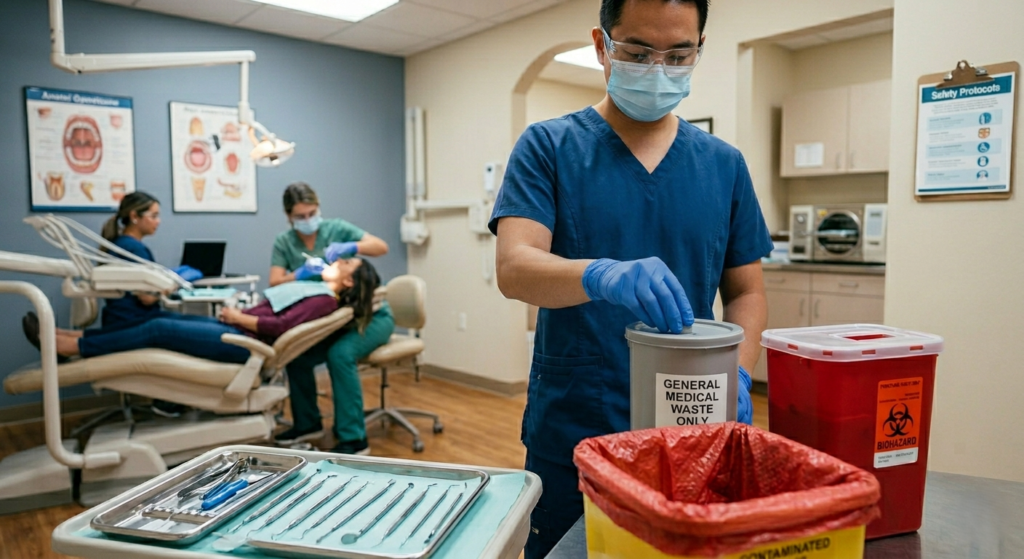
A dependable disposal partner keeps clinic operations smooth, but not all companies offer the same service quality. Dental medical waste disposal requires expertise, reliable pickups, and compliance support. Choosing the right medical waste disposal company ensures safe and efficient waste management.
Look for providers that offer:
Regulatory Compliance Support
Choose companies familiar with healthcare regulations.
They should provide:
- Waste tracking documents
- Compliance guidance
- Training support
- Emergency response assistance
Scheduled Waste Collection
Late pickups create safety risks.
Reliable collection schedules prevent overflow and contamination.
Many clinics prefer weekly or biweekly service.
Specialized Dental Laboratory Waste Handling
Dental clinics generate unique waste streams.
Providers should understand:
- Amalgam disposal
- Sharps handling
- Chemical waste management
- Dental laboratory waste disposal
MedCycle helps clinics manage Dental Waste Disposal with secure collection and compliance-focused service. Many practices appreciate having one dependable contact for every waste category.
Transparent Pricing
Unexpected fees frustrate clinic managers.
Ask providers about:
- Pickup charges
- Container costs
- Emergency service fees
- Compliance documentation costs
Clear pricing builds long-term trust.
Staff Training and Safety Measures
Even the best waste system fails without trained staff. Proper dental waste disposal should become part of daily clinic routines. Training should happen during onboarding and continue throughout the year.
Teach Proper Waste Segregation
- Staff should know where each waste type belongs.
- Simple visual charts help improve accuracy.
Provide Protective Equipment
Staff handling waste should wear:
- Gloves
- Face shields
- Protective gowns
- Eye protection
PPE reduces exposure risks during dental clinical waste disposal tasks.
Prepare for Spill Response
Clinics should maintain spill response kits. Staff should know how to handle:
- Blood spills
- Chemical leaks
- Sharps injuries
Fast action limits contamination.
Conduct Safety Audits
Routine inspections help identify problems early.
Review:
- Waste storage areas
- Sharps containers
- Labelling systems
- Pickup schedules
Dental Waste Disposal becomes easier when clinics stay proactive.
Conclusion: Safely Disposing of the Dental Waste
Just like any other medical garbage disposal, dental clinical waste disposal also needs to be performed carefully. Safe handling ensures the safety of staff as well as patients, doctors, and the environment as well.
By following the guidelines set in waste disposal for dentistry, you lower infection risks and become compliant with government policies while protecting the environment.
Dental clinics must focus on waste segregation, safe storage, staff training, and effective disposal. This disposal process should never be compromised, and experts should be contacted if they need any professional assistance.
So, if you care about your patient’s health and staff, get in touch with a business like MedCycle and rely on us for professional handling of medical garbage disposal. We manage dental medical waste disposal with greater confidence and consistency, following all dental waste disposal guidelines to ensure safe and compliant practices. As one of the trusted medical waste disposal companies, we are committed to providing reliable solutions that dental practices can count on. So, next time you need a partner, you already know who to trust!
FAQ’s
What are the most important guidelines for medical waste disposal in dentistry clinics?
Proper medical waste segregation, labelled containers, safe storage space, regular collection of waste, and proper staff training are the most important aspects.
Why is proper dental medical waste disposal important for patient safety?
It prevents the patients from inspections, contamination, and exposure to hazardous substances.
How should clinics handle dental clinical waste disposal safely?
The dental clinics should segregate the waste. The hazardous waste should be stored separately. They should follow the local regulations and also ensure to trust only the licensed waste disposal businesses.
How often should dental waste be collected and disposed of?
That’s totally the decision of the dental clinic and the dentists. However, most of the clinics prefer weekly or biweekly collection. Also, the clinics that have regular patient visits require more frequent medical waste disposal at some point.
What containers are recommended for sharps and infectious waste disposal?
Surgical items like the elevators, scalpel handlers, etc require leak-proof containers. Moreover, they should be puncture-resistant. The waste is hazardous for everyone, so the bags in which the waste is disposed should be biohazardous bags.
What types of waste disposal solutions are offered by MedCycle?
The team at MedCycle provides expert medical waste disposal services for every medical stream. Our team offers pickup, packaging, and disposal services across Texas. Additionally, we also provide containers for the dental waste.
How can dental clinics schedule medical garbage disposal services with MedCycle?
Visit our website and fill out the contact form. You can also call us directly to schedule your dental waste disposal services.
How does MedCycle ensure compliance with dental waste disposal regulations?
MedCycle helps clinics with safe medical waste collection, proper documentation, trained staff, and compliant disposal practices.