📌 Key Takeaways
Proper sharps disposal prevents needlestick injuries and exposure to bloodborne infections such as hepatitis B, hepatitis C, and HIV. Sharps include needles, syringes, lancets, auto-injectors, scalpels, infusion sets, and broken medication vials. Used sharps should be placed immediately in FDA-cleared, puncture-resistant containers without recapping, bending, or forcing them inside. Depending on local regulations, containers can be handled through mail-back programs, authorized drop-off sites, or professional medical-waste services. Federal, state, and local rules govern sharps disposal, so proper containment and compliant disposal are essential for homes and healthcare facilities.
A used needle remains dangerous even after the injection is done moving through the trash bag the collection truck and the sorting facility. Proper sharps disposal methods can help prevent the risks associated with sharps waste from the start. This guide explains what qualifies as sharps waste, which disposal methods are effective, and what federal regulations require for households and healthcare facilities.
Needlestick injuries are not a problem in hospitals. Sanitation workers, housekeeping staff and family members can get hurt by needles that’re in places where needles should not be. Most of these needlestick injuries come from one choice: someone did not use a container. According to Mordor Intelligence, the sharps containers market was valued at USD 65.57 million in 2025 and is expected to reach USD 68.79 million in 2026. It is projected to grow to USD 87.42 million by 2031, representing a CAGR of 4.91% during the 2026–2031 period.
What Are Sharps Waste?
Sharps waste covers any item with a point or edge sharp enough to puncture or cut skin. The FDAs definition includes needles, syringes, lancets, auto-injectors, infusion sets and connection needles.
Common items that qualify as sharps waste:
- Hypodermic needles and syringes
- Lancets used for blood glucose testing
- Auto-injectors, including epinephrine and insulin pens
- Scalpel blades and surgical instruments
- Infusion sets and connection needles
- Broken glass vials or ampoules from medication
The category matters because these items get treated differently from regular medical waste at every stage from the moment of use through final treatment.
Why Is Proper Sharps Disposal Important?
A needlestick injury carries risk of transmitting bloodborne pathogens, including hepatitis B, hepatitis C and HIV. That risk doesn’t fade because the needle sat in a trash can for a week.
The Risk Extends Past the Facility
Discarded needles create danger for people who never had anything to do with the original medical procedure. Waste collection workers, recycling facility employees and hotel housekeeping staff all face exposure from sharps that ended up in the stream.
Legal and Financial Consequences
Non compliance, with sharps regulations can result in fines, trouble and citations. In some areas throwing sharps in household trash is not just discouraged it is outright illegal.
Sharps Disposal Methods
Several approved sharps waste disposal methods. The right one depends on setting and volume. Safe sharps disposal looks different for a hospital generating hundreds of needles a day than it does for someone injecting insulin at home.
FDA-Cleared Sharps Containers
The baseline method for both homes and facilities. An FDA-cleared sharps disposal container is made of puncture-resistant plastic with leak-resistant sides, a tight-fitting lid and an opening large enough for a needle but too small for a hand. These are regulated as Class II devices, not just sturdy buckets.
Mail-Back Programs
Some suppliers provide containers that get mailed back for treatment once full. These work well for home users on injection schedules who don’t have convenient drop-off access nearby.
Drop-Off Collection Sites
Many pharmacies, hospitals, health departments and fire stations accept sharps containers. Some communities also run needle disposal and syringe disposal programs with public drop boxes. Availability varies widely by location so calling ahead saves a wasted trip.
Professional Collection Services
Healthcare facilities typically contract with a medical waste company for scheduled pickup. This covers container supply, transport, treatment and the documentation needed to prove compliance. For facilities handling disposal of needles and syringes at volume outsourcing sharps waste management is usually cheaper than managing it internally.
Treatment Methods After Collection
Collected sharps generally get treated through autoclaving, essentially high-pressure steam sterilization or incineration. Autoclaved sharps are often shredded afterward. Sent to a landfill since the pathogens have been destroyed.
How to Dispose of Sharps Safely
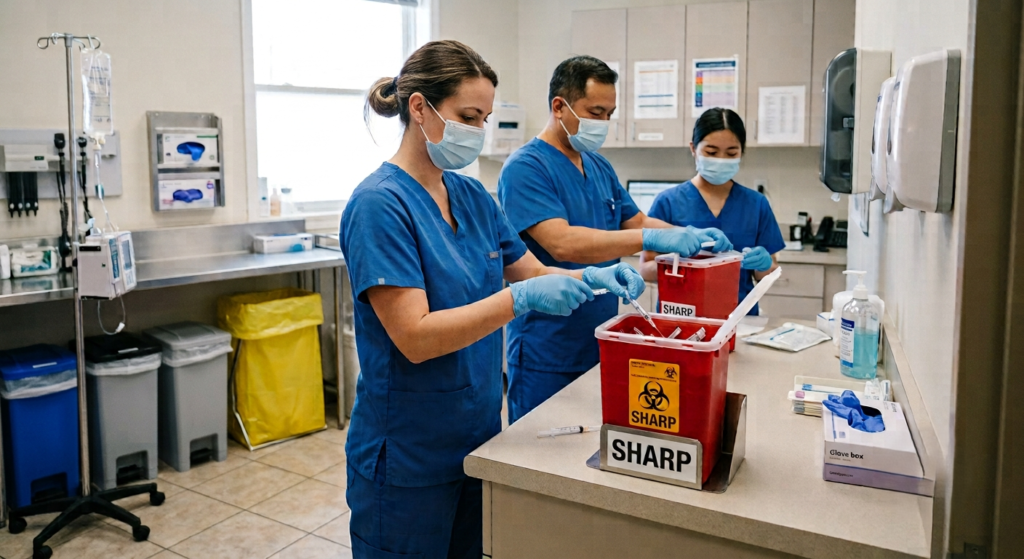
Knowing how to dispose of sharps comes down to a handful of consistent habits.
Use the Container
Drop the used sharp into the container right after use. Setting it on a counter “for a second” is how most accidental sticks happen.
Don’t Recap, Bend or Break Needles
Recapping a needle is one of the common causes of self-inflicted needlesticks. OSHA guidance generally advises against it outside of one-handed techniques.
Respect the Fill Line
Containers carry a fill line at roughly three-quarters capacity. Going past it means reaching into a container, which is exactly where avoidable injuries start.
A few additional habits worth building:
- Keep containers upright and stable during use
- Place containers close as practical to where sharps are actually used
- Never force sharps into a full container or push them down with fingers
- Seal the lid securely before transport
- Keep containers out of reach of children and pets
- Never needles down a toilet or place them in recycling
If a Proper Container Isn’t Available
The FDA acknowledges this happens. A heavy-duty plastic household container, like a laundry detergent or bleach bottle works as a temporary alternative if its leak-resistant stays upright and has a tight-fitting puncture-resistant lid. It should still be labeled clearly. Disposed of through a sharps program rather than regular trash.
Sharps Disposal Regulations and Compliance
Several federal agencies govern this. Their requirements overlap.
OSHA sets workplace standards under the Bloodborne Pathogens Standard requiring containers to be accessible placed near the point of use and properly labeled with warnings. The FDA regulates the containers themselves as Class II devices setting design and construction requirements. The DOT governs transport of sharps waste once it leaves a facility.
State and local rules add another layer. They vary significantly. Some states prohibit household sharps in trash entirely. Others allow it under containment conditions. Checking requirements isn’t optional since assuming federal compliance covers everything is a common and expensive mistake.
Conclusion
Sharps disposal methods aren’t complicated. They do require consistency. Use an approved container, use it immediately, respect the fill line and route the container through a legitimate disposal program rather than the trash. Those four habits prevent the majority of sharp injuries both inside healthcare settings and at home.
Frequently Asked Questions
What are the safest sharps disposal methods?
Using an FDA-cleared sharps container and routing it through a collection service, mail-back program or authorized drop-off site is the safest approach for both facilities and home users.
Can you put needles in the trash?
In areas no. Some states prohibit it outright. Even where permitted loose sharps in household trash create serious injury risk for sanitation workers. Community guidelines should be checked first.
Can sharps go into a recycling bin?
No. Sharps never belong in recycling. Recycling facility workers sort material by hand in operations making loose needles a direct injury and infection hazard.
What happens to sharps after collection?
Collected sharps typically undergo autoclaving or incineration. Autoclaved waste is often. Landfilled afterward since sterilization has already neutralized the biological hazard.
Why is sharps waste considered hazardous?
Because used sharps can carry pathogens like hepatitis B, hepatitis C and HIV and a single puncture is enough to transmit infection to anyone handling the waste downstream.
Why to choose MedCycle, for Sharps Waste Disposal?
MedCycle provides sharps containers, scheduled pickup and the documentation facilities need to demonstrate regulatory compliance. For practices searching for sharps disposal Houston providers handling collection, transport and treatment through one provider reduces the paperwork burden and the risk of a compliance gap going unnoticed.