📌 Key Takeaways
What is Medical waste? It includes hazardous materials such as sharps, infectious waste, pharmaceuticals, chemicals, and pathological waste generated during patient care. Proper medical waste management is essential to protect healthcare workers, the public, and the environment while ensuring compliance with regulatory standards. The disposal process involves safe segregation, collection, transportation, treatment, and final disposal using approved methods. Partnering with a reliable medical waste management provider helps healthcare facilities maintain safety, compliance, and environmental responsibility.
Hospitals, clinics, laboratories, and even dental offices generate medical waste that cannot be handled through regular trash collection. This guide explains what medical waste is, the different types it includes, why proper handling is essential, and how the disposal process works from the point of generation to final treatment. According to WHO, about 85% of the waste generated by healthcare activities is general, non-hazardous waste, while the remaining 15% is classified as hazardous.
What Is Medical Waste?
When asking what is medical waste, it is anything that comes out of diagnosing, treating, or caring for a patient and could put people or the environment at risk if it’s tossed carelessly. The category’s bigger than most people picture. Sure, used needles and surgical gloves are the obvious ones. But expired medication counts too, along with lab cultures, blood-soaked bandages, and even some of the packaging this stuff arrives in.
Understanding what is medical waste also means knowing where it actually ends up, once it leaves a clinic or hospital, isn’t something most people outside healthcare spend much time thinking about. Maybe they should. A single mishandled sharps containers leads to a real injury, not a theoretical one. Multiply that across thousands of facilities producing waste every single day, and the numbers stop feeling like an abstract problem pretty quickly.
Why Proper Medical Waste Management Matters
Understanding what is medical waste matters because healthcare facilities produce a staggering volume of waste, and a meaningful chunk of it isn’t safe for a regular dumpster. Roughly 15 percent of total healthcare waste lands in the hazardous category – infectious, toxic, sometimes radioactive. The rest is closer to standard trash, but correctly separating the two is exactly where many facilities stumble.
Mismanaged healthcare waste creates more than a compliance headache. A few of the real consequences worth knowing:
- Needlestick injuries remain one of the most common workplace hazards for nurses, techs, and waste handlers
- Infectious waste dumped in a regular landfill can contaminate soil and groundwater over time
- Improperly discarded pharmaceuticals have been linked to trace contamination in local water supplies
- Public trust erodes fast once a facility gets a reputation for cutting corners on this
The Regulatory Side
When determining what is medical waste in the U.S., facilities must consider a mix of federal and state oversight, OSHA’s bloodborne pathogens standard among them, layered with individual state environmental agencies. Requirements shift more between states than people expect. That’s a big reason so many facilities hand the process off to a specialized medical waste disposal company instead of running it entirely in-house.
Types of Medical Waste
A clear answer to what is medical waste starts with recognizing that not all medical waste carries equal risk, and treating everything the same wastes money while adding unnecessary handling burden on staff.
- Infectious or biohazardous waste – anything contaminated with blood, bodily fluids, or pathogens, like used bandages, lab cultures, or discarded surgical materials. Usually requires autoclaving or incineration before disposal.
- Sharps waste – needles, scalpels, lancets, broken glass. Sharps waste disposal runs on its own dedicated protocol precisely because this category injures people so easily when mishandled. Sharps containers, the rigid, puncture-resistant bins seen in most clinics, exist specifically to cut that risk down.
- Pathological waste – human tissue, organs, and body parts removed during surgery or autopsy. Handled with particular care, partly for safety and partly out of basic respect for what the material represents.
- Pharmaceutical waste – expired, unused, or contaminated medication. Pharmaceutical waste disposal has picked up more attention lately, largely because improperly discarded medication keeps showing up linked to water contamination studies.
- Chemical waste – solvents, disinfectants, and other lab or clinical chemicals. Some of it’s hazardous on its own; some only turns hazardous once mixed with something else.
- Radioactive waste – generated mostly by cancer treatment centers, imaging departments, and research labs. Smallest category by volume, strictest handling rules of the bunch.
- General non-hazardous waste – packaging, paper, food waste, anything that never touched a patient or hazardous material. Makes up the bulk of what a hospital throws out daily, closer to regular municipal trash than anything requiring special treatment.
Medical Waste Statistics You Should Know
The numbers behind what is medical waste are honestly a bit startling laid out plainly. U.S. hospitals generate somewhere around 33 pounds of waste per staffed bed, per day. Multiply that across roughly 923,000 staffed hospital beds nationwide and you land on more than 5.9 million tons of total healthcare waste every year.
A few figures worth sitting with:
- Close to 15 percent of that total qualifies as hazardous, infectious, or otherwise regulated material needing specialized transport and treatment
- The remaining share, while still requiring proper sorting, resembles standard non-hazardous trash
- Global data from the World Health Organization tracks a similar split – most healthcare waste falling into the general category, a smaller high-risk fraction demanding careful handling
- Disposable protective equipment and single-use surgical tools have pushed total volume upward for years running, with no real sign of slowing
None of this is shrinking anytime soon either. An aging population needing more frequent care only adds to the trend.
The Medical Waste Management Process
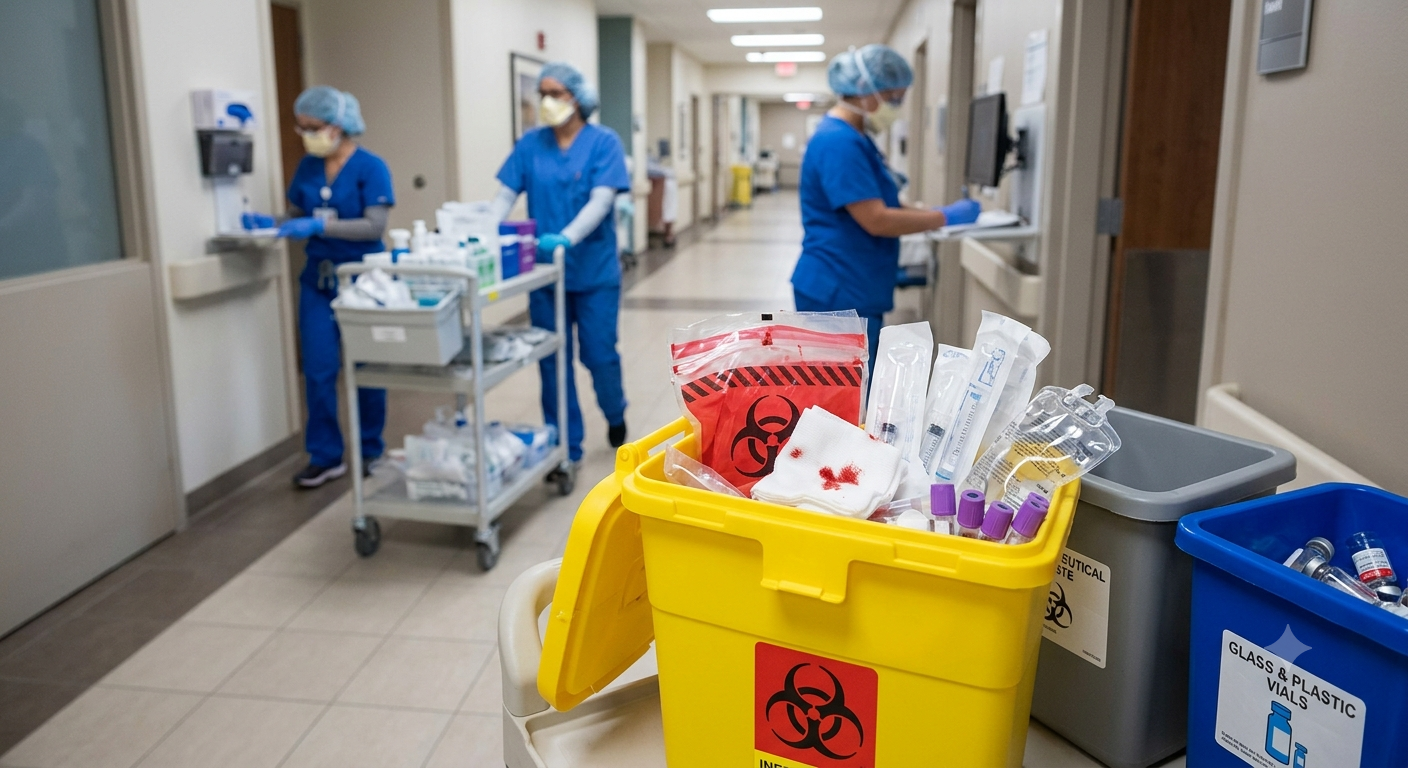
Knowing what is medical waste helps explain why getting it from a hospital room to final disposal takes more steps than most people picture.
- Segregation at the source – staff sort waste right where it’s generated: sharps into puncture-resistant containers, infectious waste into color-coded bags, pharmaceuticals into their own bins. This step matters more than any other in the chain, since mixing hazardous and non-hazardous waste early on contaminates the whole batch.
- Collection and storage – waste moves to a designated storage area within the facility, typically restricted-access, with temperature control for anything biological. Storage time is capped by regulation, since infectious material only gets more dangerous the longer it sits around.
- Transportation – a licensed hauler picks up the waste and moves it to a treatment facility, tracked through a chain-of-custody manifest from pickup straight through final disposal.
- Treatment – depending on the category, this might mean autoclaving (high-pressure steam sterilization), incineration for pathological or certain pharmaceutical waste, or chemical treatment for specific hazardous types.
- Final disposal – once treated, most waste heads to a regular landfill, since sterilization or incineration neutralizes the original hazard. Radioactive waste, notably, follows an entirely separate disposal path under additional regulation.
Conclusion: Managing Medical Waste Responsibly
Knowing what is medical waste makes it clear that it isn’t some small logistical footnote tucked behind the scenes of healthcare. It’s a real public health issue, touching worker safety and groundwater quality alike. Getting it right takes proper segregation, trained staff, and a disposal partner who genuinely understands the regulations, not just someone hauling bins away on a set schedule. Facilities that take this seriously protect their staff, their patients, and the surrounding community right along with them.
FAQs
What happens with medical waste after it is collected?
Once you understand what is medical waste, the next step is knowing that collected waste heads to a licensed treatment facility, where it gets sterilized through autoclaving, incinerated, or chemically treated depending on the category, before final disposal at a landfill or other approved site.
What is the difference between clinical waste and general healthcare waste?
Clinical waste means anything carrying an infection or contamination risk – used dressings, lab samples, that sort of thing. General healthcare waste covers everything else a facility produces, packaging and paper mostly, that never touched a patient or hazardous substance.
Can medical waste be recycled after treatment?
Some of it, yes. Certain plastics and metals, once properly sterilized, go through specialized recycling programs. Most treated waste still ends up in a standard landfill rather than a recycling stream, though.
Can medical waste pose a risk to the environment?
Definitely, especially when it’s mismanaged. Improperly discarded pharmaceuticals and infectious material contaminate soil and water, and untreated waste sitting in a regular landfill poses ongoing risk to wildlife and nearby communities alike.
How long can medical waste be stored before disposal?
Storage limits shift by state and waste type, but infectious waste generally needs treatment or removal within days to a few weeks, mainly to keep it from becoming more hazardous the longer it sits in storage.
Why choose MedCycle for medical waste management?
For facilities that understand what is medical waste, MedCycle covers the full chain of custody, proper segregation support through licensed transport and compliant treatment, so facilities stay within regulation without managing every regulatory detail on their own. That mix of compliance knowledge and dependable service is really what most healthcare providers need from a waste partner.