📌 Key Takeaways
Medical waste disposal requirements in San Antonio do not include specific local requirements for regulated medical waste disposal, but healthcare facilities must still follow applicable Texas state and federal guidelines. TCEQ oversees medical waste disposal in Texas, while OSHA, DOT, DEA, and USPS may apply depending on the type of waste and disposal method. Regulated medical waste includes sharps, blood and body fluids, pathological waste, microbiological waste, and certain pharmaceutical waste. Proper segregation, labeling, storage, and handling are essential for safe and compliant disposal. Healthcare facilities can rely on qualified medical waste disposal providers like MedCycle for safe collection, treatment, and disposal.
While there are not any local medical waste disposal requirements specifically governing San Antonio, healthcare facilities must still follow applicable federal and state guidelines, as well as requirements from other regulatory agencies to aid in medical waste management. To keep this process as concise as possible, below we’ve compiled the various, relevant medical waste management guidelines for your healthcare facility.
What Is Considered Regulated Medical Waste?
Texas Administrative Code Title 30’s definition of medical waste includes, “treated and untreated special waste from health care-related facilities composed of animal waste, bulk blood, bulk human blood, bulk human body fluids, microbiological waste, pathological waste, and sharps.” The term, “bulk,” here refers to a containerized aggregate volume of 100 mL (3.38 oz) or more.
Understanding what qualifies as regulated medical waste is an important first step for healthcare facilities working to meet medical waste disposal requirements in San Antonio.
At the state level, the Texas Commission on Environmental Quality (TCEQ) regulates the disposal of medical waste, making its rules an important part of understanding medical waste disposal requirements in Texas.
For example:
- The Department of Transportation (DOT) gets involved when medical waste management involves pick-up services.
- The Drug Enforcement Agency (DEA) covers controlled pharmaceutical waste.
- Only from regulated medical waste (RMW) generators; private citizens have a different set of rules for disposing of pharmaceutical waste.
- The United States Postal Service (USPS) is involved in situations that include mail-back.
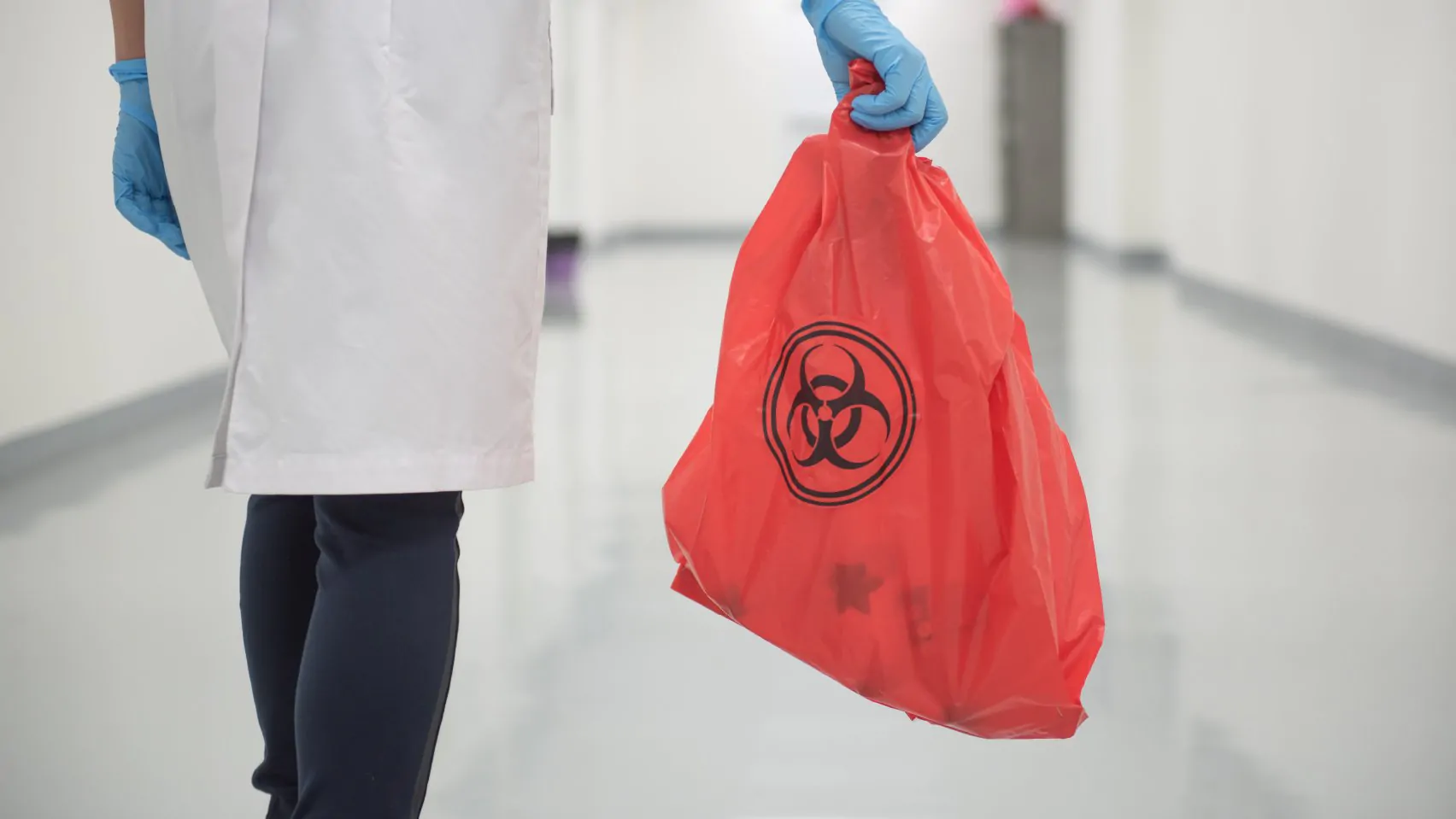
What Are the Different Types Of Regulated Medical Waste?
We’ve previously covered color-coding systems for medical waste disposal, which was based largely on the World Health Organization’s (WHO) classification system. Per the WHO’s recommendation, the different categories of medical waste include Infectious/biohazardous waste, sharps waste, pathological waste, chemical and pharmaceutical waste, radioactive waste, and general non-hazardous waste.
Proper identification and segregation of these waste streams are essential for meeting medical waste disposal requirements in San Antonio, particularly for healthcare facilities that generate sharps, infectious materials, pharmaceuticals, or pathological waste.
In addition to these recommended categories, the WHO also provides recommended storage protocols for each one. Each country has its own system, and even then there can still be deviations from site to site. The WHO’s recommended regulated medical waste scheme can provide a baseline for healthcare practices:
- Both infectious waste and pathological waste belong in leak-proof bags which then go into yellow containers marked with the biohazardous waste symbol.
- Sharps waste also goes in a puncture-proof yellow container with the biohazard symbol, this time marked “SHARPS.”
- Chemical and pharmaceutical waste should be placed in a designated pharmaceutical waste container or brown plastic bag with the appropriate hazard symbol.
- Radioactive waste only ever goes in an appropriately labeled lead box.
- General non-hazardous waste needs to go into either a plastic bag that is then placed inside another container, or straight into a container that is disinfected after each use.
- The WHO recommends the container be black, however any color container that is not already used for another type of waste is fine as well.
Does OSHA Handle Medical Waste Management?
Being another federal agency, the Occupational Safety and Health Administration (OSHA) is commonly looked at as a reputable source of information for the disposal of medical waste, but this is not fully the case: OSHA does have its own rules and regulations for storing waste, but not disposing of it.
OSHA’s website states that regulated medical waste, other than sharps waste, must be placed in closable, leak-proof containers that are also color-coded and/or labeled. These guidelines are not much more in-depth than what the WHO suggests, so understanding applicable OSHA requirements is an important part of meeting medical waste disposal requirements in San Antonio.
Disposal of Medical Waste in San Antonio, Texas
While San Antonio, Texas offers some pharmaceutical waste disposal options for residents, as well as guides for sharps disposal, it does not provide comprehensive services or guidance for regulated medical waste generators. Healthcare facilities should therefore understand the applicable medical waste disposal requirements before arranging collection and disposal.
Frequently Asked Questions
What are the medical waste disposal requirements in San Antonio, TX?
Medical waste disposal requirements in San Antonio must follow applicable Texas state and federal requirements. While San Antonio does not have specific local requirements for regulated medical waste disposal, healthcare facilities must properly handle, store, transport, and dispose of regulated waste.
What is considered regulated medical waste in Texas?
Regulated medical waste can include bulk blood and body fluids, pathological waste, microbiological waste, animal waste, and sharps generated by healthcare-related facilities.
Does OSHA regulate medical waste disposal?
OSHA provides requirements for the safe handling and storage of regulated medical waste, including using appropriate closable, leak-proof, labeled, or color-coded containers. However, OSHA does not directly regulate the final disposal of medical waste.
How should medical waste be disposed of in San Antonio?
Healthcare facilities in San Antonio should properly segregate and store regulated medical waste and use a qualified medical waste disposal provider to ensure safe handling, transportation, treatment, and disposal in accordance with applicable medical waste disposal requirements.