📌 Key Takeaways
Sharps disposal doesn’t come with one fixed price. Someone using a few needles at home may only need an occasional mail-back kit or a local drop-off service, while a medical practice generating waste regularly may need scheduled pickups. The final cost can depend on several things, including the amount of waste, container size, pickup schedule, shipping, and treatment. This guide explains the main costs to consider before choosing a disposal service.
The Cost of Sharps Disposal includes more than just the sharps containers price. Depending on the service, you may also pay for return shipping, transportation, collection, treatment, or documentation. Reviewing the complete cost before choosing a service can help you avoid unexpected charges later.
Why Proper Sharps Disposal Matters
Throwing a used needle into a regular garbage bag can create a problem long after it leaves your home or workplace. The needle can work its way through the bag and injure someone collecting or sorting the waste. Beyond safety, understanding the cost of sharps disposal can help households and businesses choose an appropriate disposal option without paying for unnecessary services.
There is also a health concern. A used sharp that contains blood can expose another person to bloodborne pathogens if an accidental needlestick occurs. That’s one reason proper needle disposal matters even when you’re only dealing with a small number of needles.
The rules aren’t identical everywhere. Some states and local governments restrict sharps from household garbage, while others allow certain disposal methods when the waste is placed in an appropriate, puncture-resistant container. Businesses can have additional requirements for storing, transporting, and documenting regulated waste. According to Mordor Intelligence, the sharps containers market was valued at USD 65.57 million in 2025 and is projected to reach USD 68.79 million in 2026. The market is expected to grow further to USD 87.42 million by 2031, reflecting a 4.91% CAGR from 2026 to 2031.
For a medical practice, following those requirements is more than a paperwork exercise. Keeping proper records can make it easier to show how the waste was handled if questions about compliance come up later.
Medical Waste Disposal Fees for Small Businesses and Clinics
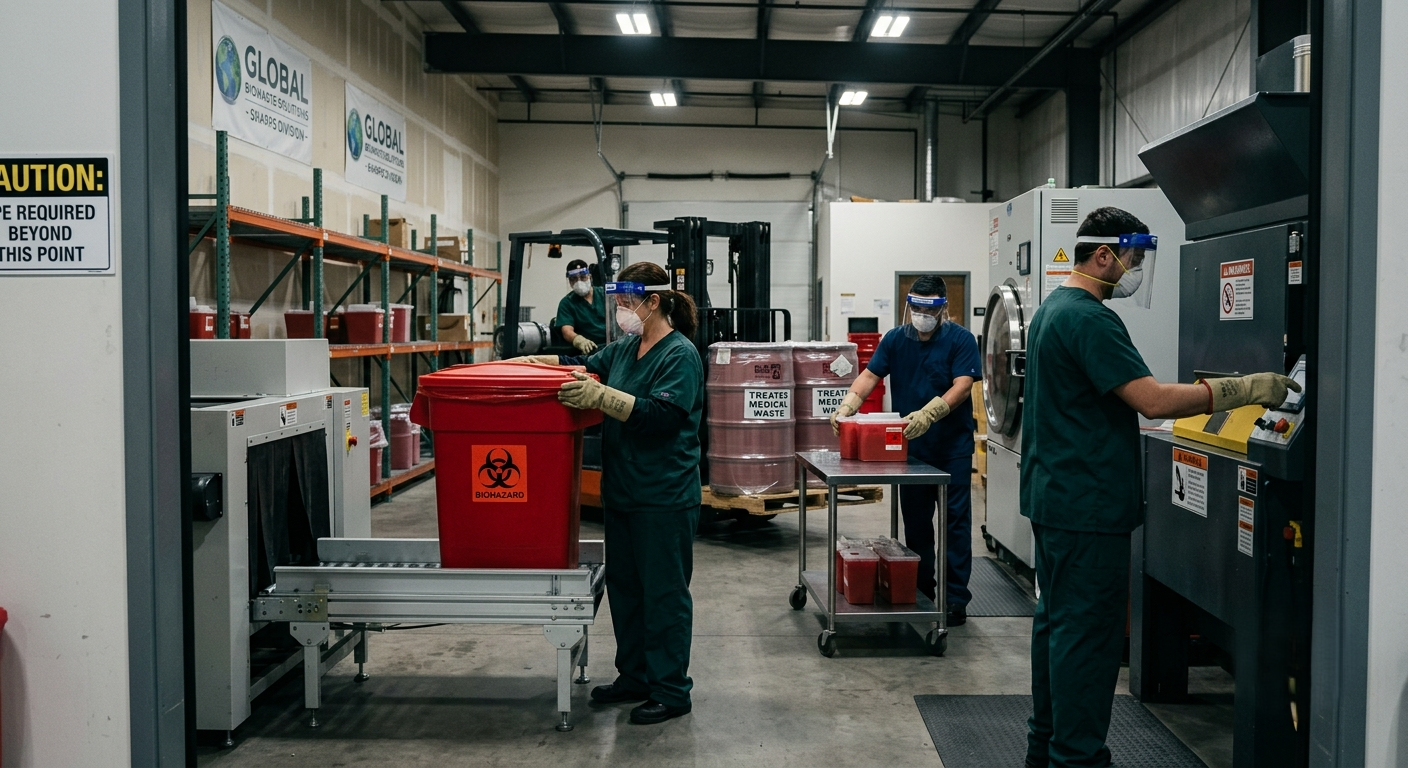
The medical waste disposal fee a small business pays usually comes down to how much waste it produces and how often it needs service. For this reason, comparing the cost of sharps disposal based on actual waste volume can help small businesses avoid paying for services they rarely use.
Consider a small dental office that fills one container every few months. Paying for frequent truck pickups may not make much sense. A mail-back service could be a better fit because the office only sends the container away when it is ready. In cases like this, evaluating the cost of sharps disposal alongside pickup frequency can help the office select a more practical service arrangement.
On the other hand, a busy clinic may fill several containers regularly. In that situation, scheduled pickup can be more convenient. A disposal company comes to the facility on an agreed schedule, collects the filled containers, and handles the next steps. For higher-volume facilities, the cost of sharps disposal may be influenced more by pickup frequency, container usage, and transportation than by the container itself.
For example, MedPro’s listed pricing includes a 1-quart system for $45 and a 2-gallon system for $75. The larger option isn’t automatically the better deal, though. If it takes you a year to fill a large container, you may be paying for capacity you don’t really need. Prices can change over time depending on the provider, container size, location, shipping, and disposal service selected, so check the provider’s current rates before ordering.
Route Pickup vs. Mail-Back for Businesses
Comparing the cost of sharps disposal between mail-back and scheduled pickup can help businesses determine which option provides the best balance of convenience and expense. Both options can work well, but they suit different situations.
A mail-back program may be convenient for:
- Small medical practices
- Dental offices
- Veterinary clinics
- Home healthcare providers
- Other businesses that produce relatively little sharps waste
Scheduled pickup makes more sense when containers fill quickly or the business has other regulated medical waste that needs to be collected at the same time.
There’s also a convenience factor. A business generating only a small amount of waste may not want to pay for a truck visit every week. A larger facility, however, may find regular pickup much easier than storing filled containers and arranging shipments.
Factors That Affect the Cost of Sharps Disposal
When comparing sharps waste disposal programs, look beyond the advertised container price. Several small details, including transportation, collection, treatment, and additional service fees, can affect the total amount you eventually pay.
Waste Volume
Because waste volume directly affects how quickly containers fill, it can have a major impact on the overall cost of sharps disposal.
How much waste you generate is probably the first thing to consider.
Someone using a few needles at home might need a small container only occasionally. A clinic performing injections throughout the day will obviously go through containers much faster.
Before contacting a provider, think about how quickly your current container fills. That gives you a much better starting point when comparing service options.
Container Size
Choosing the right container size is another way to manage the cost of sharps disposal without sacrificing safe waste handling.
The size of the container affects the upfront cost as well.
A small container may be perfectly adequate for a low-volume user. Larger containers cost more but can make sense when a business generates enough waste to fill them regularly.
Pickup Frequency
Adjusting pickup frequency when appropriate can make a meaningful difference in the cost of sharps disposal for businesses with predictable waste volumes.
Businesses using professional collection services also need to think about how often they want pickups.
Weekly collection provides frequent removal, but it also means more service visits. A smaller practice may be perfectly comfortable with a monthly or less frequent schedule if its waste volume and local requirements allow it.
A facility generating a significantly larger amount of waste may require more frequent collection due to limited storage capacity or other factors.
Therefore, the objective is to determine the schedule that best suits your specific needs rather than a standard most frequent schedule.
Disposal Method
The method you choose can make a noticeable difference to your overall spending.
Depending on your location and the type of waste you generate, options may include:
- Mail-back services
- Professional route pickup
- On-demand collection
- Approved community drop-off programs
Not every option is available everywhere. Before using a particular method, confirm that it is accepted under the rules that apply to your location.
Shipping and Transportation
This is one of those costs that’s easy to overlook.
A mail-back service might advertise a price that already includes return shipping. Another company could list the container price separately and add transportation charges later.
The same thing applies to professional pickup. Ask whether fuel charges, transportation, collection, and treatment are included in the quoted price.
A provider that initially looks more expensive may actually be cheaper once all the extra charges are added up.
Documentation and Compliance
For businesses, there can be another consideration: paperwork.
Some professional medical waste disposal services provide records showing that collected waste was transported and treated. Depending on the type of facility and the rules that apply, this documentation may be useful for maintaining waste-management records.
When comparing providers, ask what documentation comes with the service. It’s much easier to compare two companies when you know exactly what you’re getting for the quoted price.
Conclusion: Making Sharps Disposal Safe and Cost-Effective
The cost of sharps disposal is determined by several factors, including the amount of waste generated, the size of the container, the frequency of pickup, and the type of disposal selected. At the same time, a household that only generates a few needles per month will have different requirements than a medical facility that has to dispose of several containers of used syringes every week.
Therefore, instead of focusing on the lowest advertised price, it may be necessary to evaluate the overall cost, which also includes transportation, treatment, and any additional fees. Moreover, depending on the size and frequency, mail-back or local disposal options may be available for some businesses.
FAQs
Can I put a sealed sharps container in my regular trash?
That depends on where you live. Some areas don’t allow sharps in household garbage even when the container has been sealed. Others have specific rules about the type of container and how it must be handled. Check your local requirements before putting a filled container in the trash.
What is the penalty for improper sharps disposal?
There isn’t one standard penalty across the country. Consequences depend on the location, the type of waste, and whether the violation involves a household or a regulated business. Healthcare facilities may also face compliance or workplace-safety issues if sharps aren’t handled according to applicable requirements.
Are pickup and transportation charges included in sharps disposal costs?
Sometimes, but it depends on the provider. Some companies include shipping or transportation in their advertised price, while others charge separately for pickup, fuel, or additional services. Ask for the full price before signing up so you know what the final bill will include.
What is the most economical way to dispose of sharps safely?
For someone who produces only a small amount of waste, an approved local drop-off program or mail-back service may be more practical than paying for regular pickup. A business generating larger volumes may find scheduled collection more convenient and cost-effective. Compare the total cost based on how much waste you actually produce.
What happens to sharps containers after they are collected?
Filled containers are transported to an authorized treatment facility, where the waste is handled according to applicable requirements. The treatment process can vary depending on the provider, type of waste, and local regulations. Businesses should ask their disposal company what treatment and documentation are included in the service.
Why choose MedCycle for Safe Sharps Disposal?
MedCycle can be an option for businesses looking for professional sharps disposal services. When comparing providers, look at more than the advertised price. Container options, pickup or mail-back arrangements, transportation, treatment, documentation, and customer support all matter when deciding whether a disposal service is a good fit for your facility.