📌 Key Takeaways
Pharmaceutical waste management is, about how expired drugs, medications and contaminated supplies are sorted, stored and disposed of in a safe way. If done incorrectly it can pollute water, harm staff. Put facilities in legal trouble. If done correctly it protects people. Is hardly noticed. This guide covers what is considered waste how to sort it the disposal methods that are available and the rules that facilities must follow to stay in compliance.
Every hospital, clinic and pharmacy ends up with drugs that can no longer be used. Old pills, leftover liquids, used vials – all of these must be sent to a place. That is the purpose of waste management. Pharmaceutical waste management means handling, sorting and disposing of expired medicine the right way. If done poorly pharmaceutical waste can harm people. Pollute the environment. If handled correctly pharmaceutical waste keeps everyone safe. Protects facilities from problems. This guide explains how to handle waste safely the disposal methods available and the rules that must be followed. According to Mordor Intelligence, the pharmaceutical waste management market is expected to grow from USD 1.52 billion in 2025 to USD 1.61 billion in 2026, with projections reaching USD 2.18 billion by 2031.
What Is Considered Pharmaceutical Waste?
Pharmaceutical waste is anything that was once a medicine but can no longer be used and must be thrown away safely. This includes pills that have expired, extra liquid medicine IV bags that’re half empty and any packaging that came in direct contact with the drug.
It’s actually more than what most people think. Even things like gloves that touched medicine, a syringe that was used or gauze that absorbed a drug. All of those count, as waste.
Here’s how it usually breaks down:
- Hazardous pharmaceutical waste – drugs that are toxic, flammable, or otherwise dangerous under federal rules.
- Non-hazardous pharmaceutical waste – the everyday medications that don’t carry that danger label, but still can’t go straight in the trash.
- Controlled substances – drugs like opioids that need their own separate, tightly watched process because of DEA rules.
Sorting this out early saves a ton of trouble later. Honestly, most compliance headaches start with waste sitting in the wrong bin from day one.
Why Is Pharmaceutical Waste Management Important?
Drugs don’t just vanish once they’re thrown away. Traces of medication have shown up in rivers, streams, and even some drinking water. That happens when pharmaceutical waste gets flushed or dumped instead of disposed of properly.
And it doesn’t stop at water. Fish and other wildlife absorb these chemicals too, and researchers are still figuring out what that means long term.
There’s a people-safety side to this as well:
- Needle injuries from waste that wasn’t handled carefully
- Accidental exposure to strong or hazardous drugs
- Theft of controlled substances that weren’t disposed of properly
On top of all that, there’s real money on the line. Facilities that mess up pharmaceutical waste management can face fines from federal and state agencies. Additionally, it can hurt relationships with insurers and accreditation bodies, which matters more than people realize until it happens to them. This isn’t just an environmental issue anymore. It’s a business risk too.
Pharmaceutical Waste Segregation and Classification
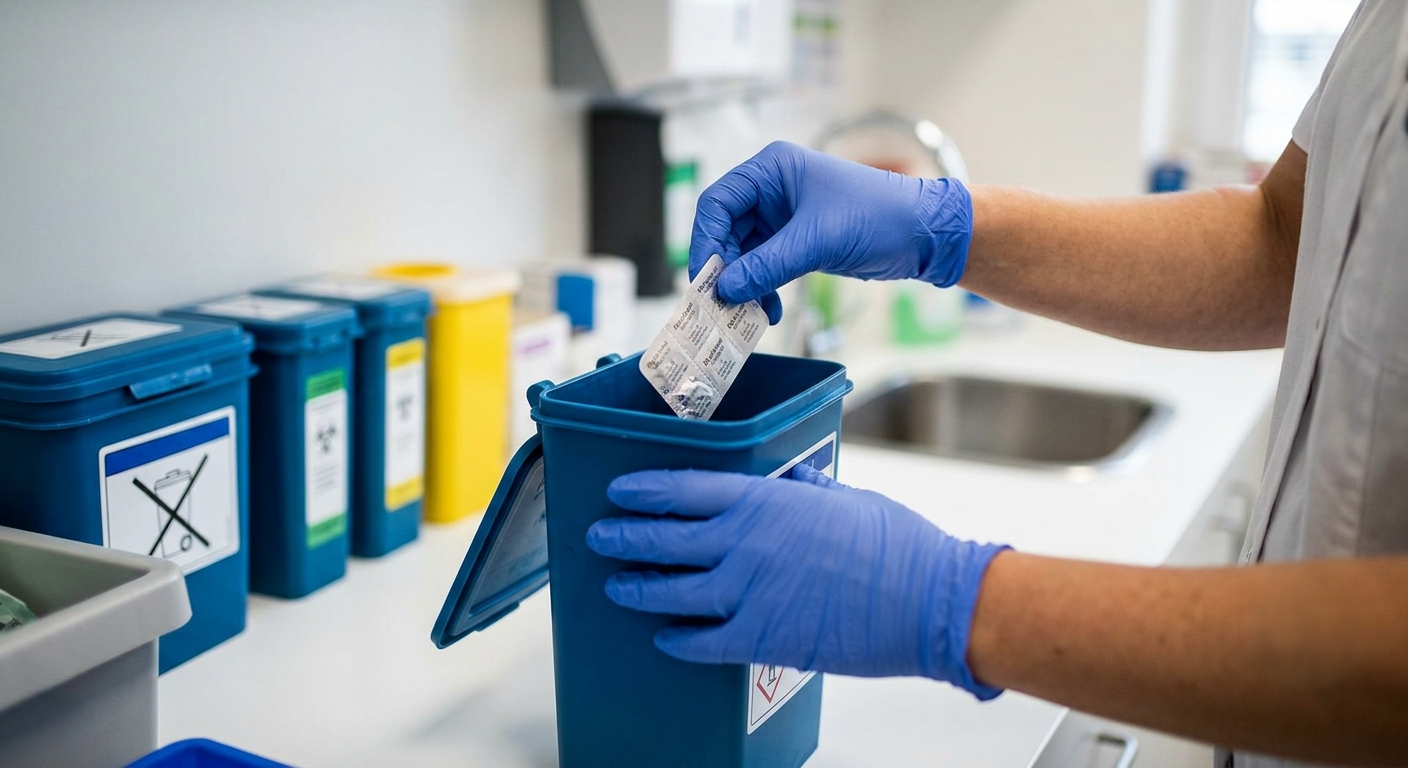
Segregation is where pharmaceutical waste management usually trips people up. Sounds simple on paper, put the right waste in the right bin, but in practice, the lines blur even for trained staff. Good pharmaceutical waste management depends on getting this step right before anything else.
RCRA Hazardous Waste
Some drugs are specifically listed as hazardous by federal regulation. This includes certain blood thinners, nicotine-based products, and a handful of chemotherapy drugs.
Non-RCRA Hazardous Waste
Other drugs are hazardous because of how they behave chemically, even though they’re not on an official list anywhere. Some hormone-based medications land here.
Controlled Substances
Anything under Schedule II through V needs its own separate disposal path, often requiring a witness or a registered handler to sign off.
Non-Hazardous Pharmaceutical Waste
This is the category by volume. Most common prescriptions and, over-the-counter drugs belong to waste but that does not mean they can be thrown out carelessly.
Furthermore waste such as gloves or tubing that touched chemotherapy drugs but was not heavily exposed also receives its smaller category.
If proper sorting is skipped facilities often end up either spending much on disposal or failing to protect pharmaceutical waste that needed stricter handling.
Pharmaceutical Waste Disposal Methods
There’s no single way to get rid of pharmaceutical waste. The right method really depends on what drug you’re dealing with.
- Incineration – the go-to method for hazardous drugs and controlled substances. Burning at high heat breaks the drug down completely, which matters a lot for stronger medications.
- Chemical treatment – used to neutralize certain hazardous drugs before disposal, though it’s less common outside specialized facilities.
- Landfill disposal – only allowed for truly non-hazardous pharmaceutical waste, and only once it’s been made impossible to identify or reuse.
- Reverse distribution – applies to sealed, unexpired medication. Manufacturers sometimes give credit for it, which cuts waste and saves money at the same time.
- Take-back programs – let regular people drop off old household medications at pharmacies or other approved spots, usually without an appointment.
Moreover, plenty of facilities mix a few of these pharmaceutical waste disposal methods depending on drug type and volume. There’s no single formula that fits every situation, and that’s exactly why this part trips up so many places.
Pharmaceutical Waste Management Guidelines and Compliance
Rules come from than one direction. Rules are part of why the whole topic feels confusing at first. Following pharmaceutical waste management guidelines from the start makes audits far less painful later.
The EPA sets standards, for how healthcare facilities handle hazardous pharmaceutical waste. These Rules were built with hospitals and clinics in mind replacing regulations that were never really designed for medical settings anyway.
The DEA separately controls how facilities dispose of controlled substances, requiring registration and strict destruction steps.
State agencies often stack their own rules on top of federal ones too, so what’s fine in one state might not cut it in another.
A few things that make compliance easier:
- Regular staff training, not just a one-time session
- Clear, consistent labeling on every container
- Routine internal checks before a regulator ever shows up
Staff training gets skipped more than it should. Even the best container system falls apart if nobody knows which bin to use for which waste.
Choosing the Right Pharmaceutical Waste Containers
The right pharmaceutical waste container make day-to-day handling a lot easier for busy staff. Black usually means hazardous waste. Yellow typically means chemotherapy waste. Blue or white generally means non-hazardous pharmaceutical waste. These colors aren’t a strict legal rule everywhere, but most facilities stick to this pattern because it keeps things simple.
How Professional Pharmaceutical Waste Disposal Services Help
Handling all of this alone is possible, but it’s a lot to carry for most facilities. This is usually where outside pharmaceutical waste management support makes the biggest difference. A pharmaceutical waste collection service takes care of sorting, transport, paperwork, and final disposal, which frees up staff to spend time on patients instead of waste logs.
A good pharmaceutical waste disposal company also helps facilities stay up to date with changing regulations. Rules can change more often than expected, and missing an update can lead to compliance issues during an inspection. For a lot of facilities, outsourcing drug waste disposal ends up cheaper than trying to manage it all in-house anyway.
Frequently Asked Questions
What are the different types of pharmaceutical waste?
The main types are RCRA hazardous waste, non-RCRA hazardous waste, controlled substances, trace chemotherapy waste, and non-hazardous pharmaceutical waste.
What is the safest method of pharmaceutical waste disposal?
High-temperature incineration is generally seen as the safest choice for hazardous drugs and controlled substances since it fully breaks the drug down.
How should expired medications be disposed of?
Expired medication disposal should go through a take-back program, an approved drop-off spot, or a licensed disposal service. Flushing them or tossing them in the trash at home isn’t safe.
Can pharmaceutical waste be thrown in the regular trash?
No. Even waste labeled non-hazardous usually needs to be made unusable before it hits a landfill, and hazardous or controlled drugs face even stricter rules.
What containers are used for pharmaceutical waste?
Most facilities rely on color-coded pharmaceutical waste containers: black for hazardous waste, yellow for chemotherapy waste, and blue or white for non-hazardous waste.
How is pharmaceutical waste collected and transported?
Licensed haulers manage pharmaceutical waste collection from facilities and move it to approved treatment or incineration sites, with paperwork tracking every step.
Why Choose MedCycle for Pharmaceutical Waste Management?
MedCycle takes care of proper sorting, reliable containers, and steady pickup schedules, so facilities stay compliant without pulling staff away from patient care.