📌 Key Takeaways
Medical waste segregation is the practice of sorting hospital waste by hazard type when it is thrown away not later. When medical waste segregation is done correctly staff stay safer inspections go smoothly and disposal costs shrink. When medical waste segregation is done badly one mixed‑up bag can undo all of that. This guide explains what medical waste segregation really looks like why medical waste segregation is worth the effort the categories and where the waste goes after it leaves the building.
Not all hospital trash is equal. A used glove, an empty pill bottle, and a discarded scalpel need three completely different disposal paths. Medical waste segregation is just the practice of keeping those paths separate from the start. Sounds basic. It isn’t, mostly because it depends on dozens of tired staff members making the right call, every time, without thinking twice about it. According to Grand View Research, the U.S. medical waste management market was valued at approximately USD 9.17 billion in 2025 and is projected to reach USD 15.26 billion by 2033, expanding at a CAGR of 6.39% from 2026 to 2033.
What Is Medical Waste Segregation?
Segregation involves sorting waste according to its hazard level at the point of generation, before it leaves the room where it was produced. Sharps are placed in designated containers for safe sharps waste disposal, contaminated materials are separated into appropriate containers, and ordinary trash is disposed of separately.
Once things get mixed, there’s no fixing it. A single needle in a bag of paper towels turns the whole bag into biohazard waste. So the sorting has to happen right away, at the bedside or the lab bench, by whoever is holding the item.
Who Actually Does the Sorting
There’s no separate “waste team” walking around hospitals sorting trash after the fact. It falls on:
- Nurses handling dressings and IV lines
- Lab techs dealing with samples and cultures
- Housekeeping staff emptying bins at the end of a shift
If any one of them guesses wrong, the whole system slips.
Why Is Medical Waste Segregation Important?
Needlestick injuries are still common in healthcare, and a lot of them trace back to a sharp that ended up somewhere it shouldn’t have.
Bad segregation also spreads infection risk to people who never touch a patient directly. Sanitation crews handling general trash aren’t expecting to find a blood-soaked bandage in there, and honestly, they shouldn’t have to.
Then there’s the cost side, which often gets overlooked. Regulated waste is expensive to treat, as it may require autoclaving or incineration under strict conditions. Healthcare waste companies manage these disposal processes, but when a facility puts food wrappers and office paper into red bags out of habit or convenience, it ends up paying hazardous-waste rates for materials that never required such treatment.
Regulators Don’t Go Easy on This
Health-care waste management is regulated at both the federal and state level, and inspectors check paperwork as much as bins. OSHA violations around bloodborne pathogens carry real fines. A facility with sloppy records isn’t just risking a slap on the wrist.
Medical Waste Segregation Categories
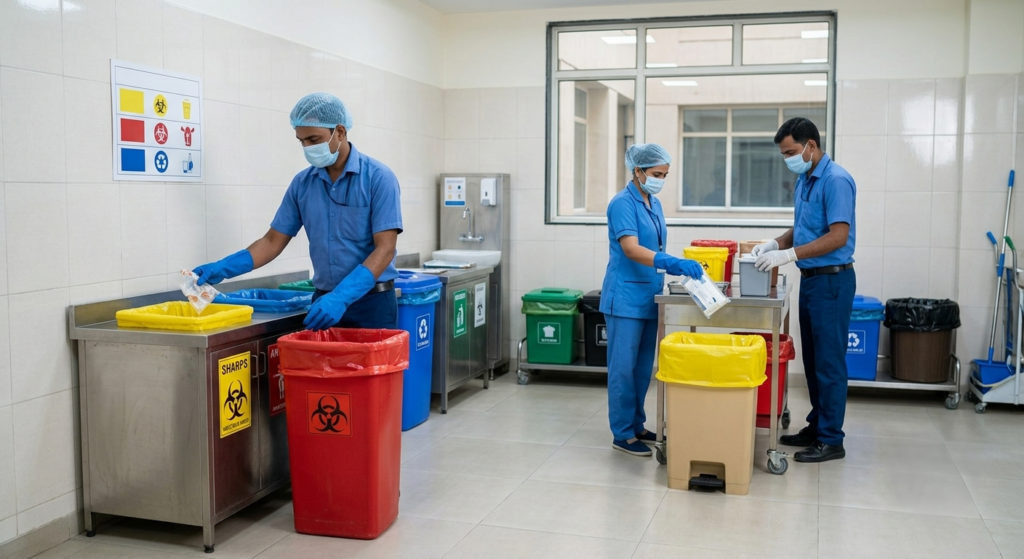
Most facilities rely on a color-coded system for healthcare waste segregation. It’s not complicated once it’s learned, but it does need to be taught, not assumed.
Infectious Waste – Red Bags
Blood-soaked gauze, used IV tubing, specimen containers. Anything that’s touched blood or bodily fluid goes here. Red is the color almost every US facility sticks to.
Sharps – Rigid Containers
Needles, scalpels, broken glass. These need a hard, puncture-proof container, not a bag. A soft bag and a needle are a bad combination, full stop.
Pathological Waste – Yellow Containers
Tissue, organs, and other anatomical waste from surgery or pathology. Smaller clinics rarely see this stream; hospitals and surgical centers deal with it regularly.
General Waste – Black Bins
Paper, packaging, food scraps. Nothing here should have touched a patient. This is also the bin most likely to get contaminated by accident, usually because someone was in a rush.
Chemical and Pharmaceutical Waste
Expired drugs, chemo agents, lab chemicals. These can’t be handled the same way as biological waste, so they usually need a separate contractor and a separate process.
Radioactive Waste
Rare outside of nuclear medicine or certain oncology departments. When it does show up, the handling rules are strict and closely watched by federal agencies.
What Happens After Medical Waste Is Segregated?
Sorting is only step one. Clinical waste contractors pick up on a set schedule and keep records showing where every load went and how it was treated. That paperwork matters as much as the pickup itself.
Infectious waste is usually autoclaved with pressurized steam, or incinerated. Sharps go through a similar process, then get shredded once sterilized. Pharmaceutical waste often takes a different route depending on what drug is involved.
Good healthcare waste companies do more than haul bags away. Many of them manage treatment records and compliance reporting too, which takes a real burden off facility staff. Picking the right one among medical waste companies isn’t just a cost decision, it’s a compliance decision.
There’s an environmental upside as well. Less waste ends up needing incineration when sorting is done properly, which means fewer emissions overall. Not a dramatic change, but not nothing either.
Conclusion
Safe medical waste management starts with simple steps. Train staff properly, use the right containers, and make sure waste is separated correctly. Working with a reliable disposal company also helps keep the process safe and compliant. With regular training and consistent habits, healthcare facilities can manage medical waste more safely every day.
FAQs
What items must always be segregated as infectious or regulated medical waste?
Blood-soaked materials, used sharps, lab cultures, and surgical or pathological waste. Contaminated gloves and dressings count too.
What are the safe practices for handling and disposing of sharps?
Never recap a needle by hand. Keep puncture-resistant containers within reach, and swap them out once they’re about three-quarters full instead of waiting for them to overflow.
Can proper segregation reduce facility costs and environmental impact?
Yes. Hazardous waste costs more to treat than general trash, so keeping ordinary items out of red bags saves money. It also means less material gets incinerated, which cuts down emissions.
How can hospitals improve waste management in hospitals?
Regular staff training and containers placed where waste is actually generated make the biggest difference. Periodic audits catch bad habits before they become routine.
Who should be responsible for medical waste segregation?
Everyone generating waste has a part in it, from doctors to housekeeping. Administrators are responsible for building the systems and training that make correct sorting realistic in the first place.
Can MedCycle help with medical waste segregation?
MedCycle sets up compliant segregation systems for healthcare facilities, supplies the right containers, and manages pickup and treatment. For facilities that don’t want to manage compliance in-house, that kind of support tends to be worth it.