📌 Key Takeaways
Used needles pose a significant risk to anyone who may come into contact with them. Depending on your state and local area, there are different options for how to safely dispose of needles. This guide explains where to take needles for proper disposal, how to handle and dispose of them safely to prevent injuries, and other common-sense measures to help avoid needle-stick injuries.
Insulin injections, blood thinners, allergy shots, fertility meds – millions of Americans use needles every day. Most of these needles are discarded improperly. One simple change in your everyday habits can put sanitation workers and others at far greater risk of injury due to improper needle disposal. How to dispose of needles is a simple question with a simple answer. Learning how to safely dispose of needles is one change most people can make today
Why You Should Safely Dispose of Needles
Learning how to safely dispose of needles is especially important for households where injections or other sharps are used regularly.
Real risk here, and not just for whoever used the needle in the first place.
Used needles can cause people to contract blood diseases such as hepatitis B, hepatitis C, and HIV through a blood transfusion. The sanitation workers face these problems everyday when a sharp object pierces right through a bag tossed into the dumpster. Family members run into it too. A curious kid reaching into a trash can has zero idea what’s actually in there.
- Prevents accidental needlestick injuries to sanitation workers and household members
- Cuts the spread of bloodborne infections through improper handling
- Keeps sharps out of recycling streams, where they contaminate the whole batch
- Meets state and local disposal rules, which vary more than people expect
Sharps disposal laws vary by state and jurisdiction. Some places do not allow disposal of sharps in home trash, while some require that they be placed in an approved or puncture resistant sharps container. Taking a few simple precautions to safely dispose of needles can significantly reduce the risk of injuries to family members, sanitation workers, and others.
Where Do I Dispose of Used Needles?
Where to dispose of used needles? This is actually the next question many people have after determining that they can’t simply throw them away with the rest of their trash. Fortunately, there are several options available. The best choice will depend on the person’s location, the amount of sharps waste they need to dispose of, and the available medical waste disposal options in their area.
Knowing where to safely dispose of needles makes it easier to choose the right drop-off, mail-back, or professional disposal option.
Drop-off locations work well for most people. Pharmacies, hospitals, and some fire stations often take sharps from local residents. Plenty join organized collection programs run through local health departments, though availability shifts a lot from county to county.
Mail-back programs suit anyone without easy access to a drop-off site. A sealed, approved sharps containers ships straight to a licensed disposal facility, and several manufacturers throw in prepaid postage with the original container.
Searching for Needle Disposal Near Me
Search needle disposal near me, and local pharmacy programs may appear among the available options. City and county health department websites can also help identify nearby drop-off locations and community disposal events.
How to Dispose of Syringes and Needles Properly
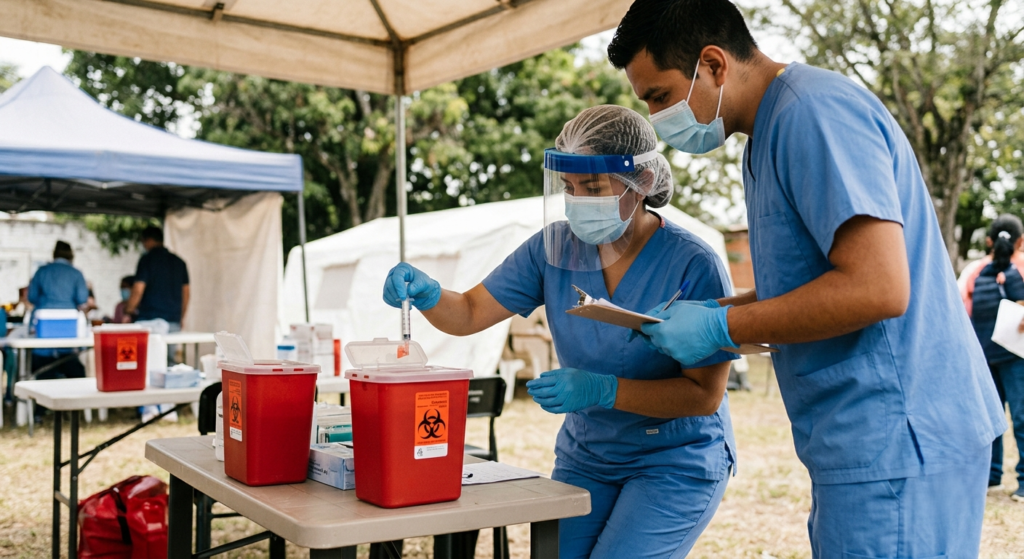
Getting the process right matters just as much as knowing where to take them.
Use an FDA-cleared sharps container whenever one’s available. Built and tested specifically for puncture resistance, unlike some random container grabbed from under the sink. Fill it about three-quarters full, never to the top, then seal it following the container’s instructions before transport. According to the U.S. Food and Drug Administration (FDA), used needles and other sharps should be placed immediately into an appropriate sharps disposal container after use.
No cleared container on hand? A heavy-duty plastic container with a tight, puncture-resistant lid works as a temporary substitute; an empty laundry detergent bottle does the job fine. Skip glass entirely. Skip anything flimsy enough to bend under light pressure, too.
How to Dispose of Unused Needles
How to dispose of unused needles can differ slightly to how to dispose of used needles, the same caution should be given to both. If one has to get rid of an unused needle, it is best to refer to the local waste disposal guidelines or manufacturer’s instructions rather than throwing it away with the regular trash.
Establishing the Best Practices for Sharps Waste Disposal
It is critical to position a sharps disposal container in a convenient place near the point of use. If a sharps disposal container is placed at some distant and inaccessible point, needles will be disposed of in the regular trash.
Conclusion: Safely Dispose of Needles to Protect People and the Environment
Making it a routine to safely dispose of needles protects household members, waste workers, and the environment from unnecessary sharps-related risks.
Proper disposal of needles can be achieved by cultivating the habit of throwing used needles away into a proper sharps disposal container. After that, it is necessary to use the most convenient for you method of disposal, the examples of which are local disposal programs or mail-back services. Remember that needles, if not properly disposed of, can endanger not only your family, but also sanitation workers and other people who may come into contact with them.
FAQs
Can I dispose of syringes and needles in regular trash?
The rules are different in each state and sometimes even in each city. Needles should never be thrown away in a bag because they can poke holes in the bag and injure someone emptying the trash.
Can I recycle used needles or syringes?
No. Sharps can’t go through standard recycling, since they contaminate the batch and risk puncturing workers sorting recyclables by hand.
When should I replace a sharps disposal container?
Replace it once it’s about three-quarters full. Don’t wait until it’s overflowing, since an overfull container raises the risk of an accidental spill during handling.
What should I do if I accidentally get pricked by a used needle?
Wash the area right away with soap and water, then contact a healthcare provider promptly to discuss possible bloodborne pathogen exposure and next steps.
Why choose MedCycle for Safe Needle Disposal?
MedCycle offers compliant sharps disposal for households and healthcare facilities alike, handling collection and proper treatment so nothing gets mishandled or improperly thrown out.