Effective biohazard waste management is more than compliance it is a critical operational practice that ensures safety, accountability, and efficiency. Hospitals, laboratories, clinics, and pharmaceutical facilities all rely on proper container selection to maintain structured Biohazard Waste Management.
Choosing the right container is essential for accurate manifest creation, precise tracking, and operational efficiency. Integrated with Medical Waste Disposal Services, containers allow facilities to monitor every step of the waste journey from generation to final destruction. When combined with Secure Document Shredding Services, they also protect sensitive information while maintaining regulatory compliance.
Beyond just regulatory adherence, investing in the right container system demonstrates a facility’s commitment to safety and operational excellence. Staff confidence improves when everyone understands which container to use, how to label it, and how the waste will eventually be treated. This clarity reduces accidental exposure incidents and strengthens overall workplace safety.
A properly selected container is the foundation of a fully auditable and transparent waste management system.
The Strategic Role of Container Systems
The choice of container systems goes beyond storage it directly affects compliance, operational workflow, and workplace safety. Containers act as physical and procedural checkpoints, ensuring each waste stream is handled and documented appropriately.
Standardized containers help facilities:
- Create consistent handling practices across departments
- Reduce risk of contamination and cross-contamination
- Integrate smoothly with digital tracking platforms
Facilities that implement Biohazard Waste Management protocols with well-designed container systems experience fewer operational errors, smoother workflows, and enhanced regulatory readiness. Containers become active tools that turn waste management into a controlled, measurable process.
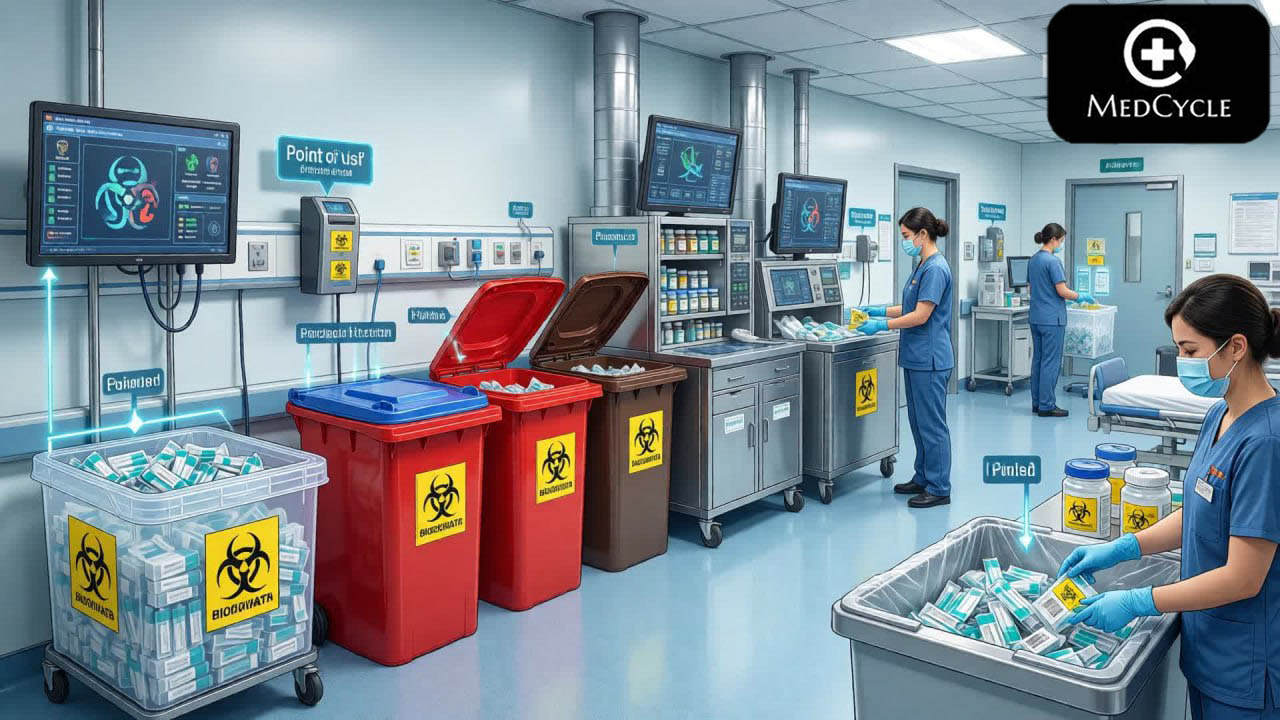
Moreover, strategic container placement throughout a facility improves accessibility and workflow efficiency. For example, placing sharps containers at point-of-use reduces the risk of accidental needle sticks, while ensuring infectious waste bins are located near patient care or laboratory areas minimizes unnecessary handling. This attention to detail reinforces compliance and staff safety, while simultaneously streamlining the collection and disposal process.
Waste Segmentation and Accurate Manifest Creation
Proper waste segregation is fundamental for accurate manifests. Misclassified sharps, infectious materials, or pharmaceutical waste can lead to safety hazards, compliance violations, and increased treatment costs.
In modern Biohazard Waste Management, containers must be designed for the specific type of waste generated. Using color-coded and labeled containers at the point of generation helps staff immediately identify the correct disposal method. This structured approach ensures manifests are accurate and defensible, while treatment costs are optimized.
Facilities leveraging Medical Waste Disposal Services with the correct container systems notice a reduction in human error, improved workflow efficiency, and smoother audit preparation. Training staff to understand the importance of proper segregation and container use creates a culture of compliance that permeates the organization.
Additionally, detailed documentation at the point of waste generation simplifies internal reporting and regulatory audits. When each container is accurately labeled and logged, staff can track waste volumes per department, identify inefficiencies, and implement corrective measures proactively. Over time, this approach reduces overall waste generation, lowers disposal costs, and improves sustainability metrics—an increasingly important factor in healthcare facility operations.
Digital Tracking and Chain-of-Custody
Digital tracking is essential for full accountability in regulated biohazard waste management. Containers equipped with barcodes or RFID tags create a real-time log of every movement, ensuring traceability from generation to destruction.
Integrating digital tracking with Medical Waste Disposal Services and Biohazard Waste Management platforms allows facilities to access up-to-date manifests, destruction certificates, and pickup confirmations instantly.
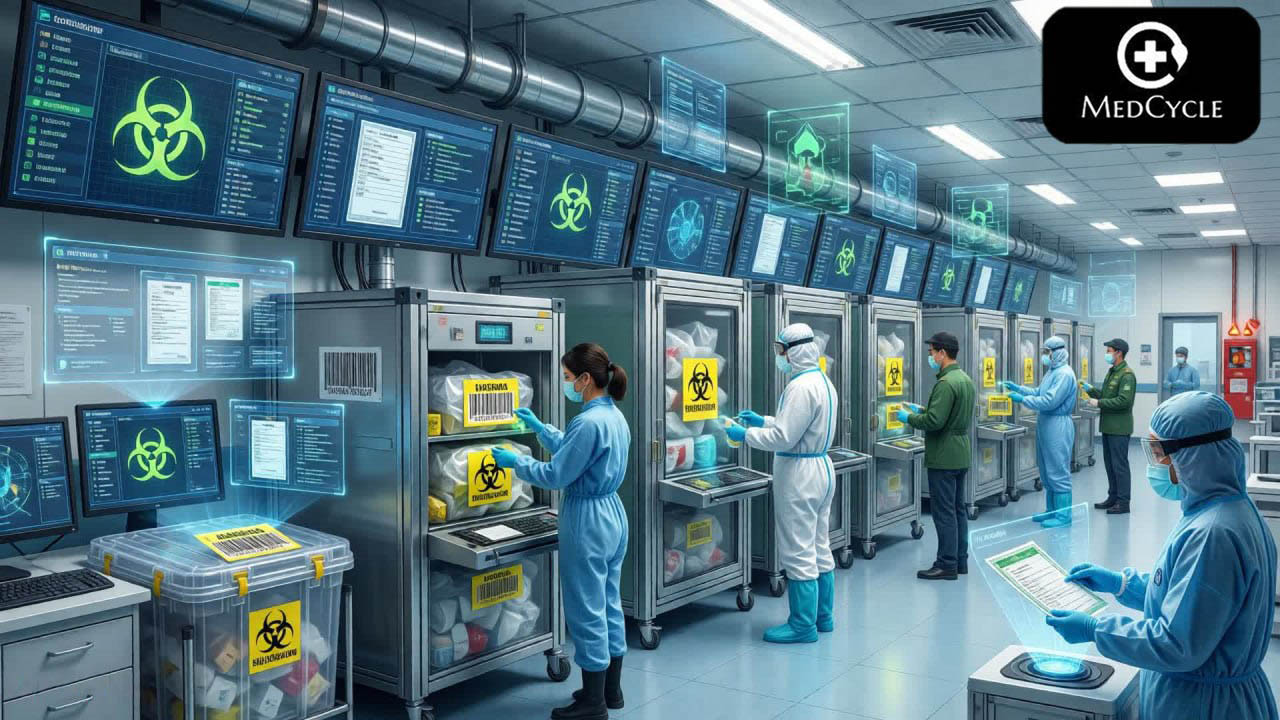
This system reduces human error, enhances operational transparency, and ensures compliance during audits. Containers thus become more than passive storage, they are active compliance tools, ensuring every piece of waste is accounted for and verifiable.
Advanced tracking also supports emergency response and investigation scenarios. For example, if a container becomes compromised or is misplaced, digital logs can quickly identify its last known location, the responsible staff, and the content type. This level of control is invaluable for preventing potential exposure incidents and mitigating liability.
Furthermore, linking digital container tracking to facility-wide dashboards provides management with real-time metrics, enabling data-driven decisions regarding workflow adjustments, container replacement cycles, and departmental waste patterns. These insights empower facilities to continuously refine their operations and maintain compliance at all times.
Closed-Loop Waste Flow: From Generation to Destruction
A closed-loop waste system connects every stage of the biohazard waste lifecycle, ensuring no gaps in documentation or compliance.
Key features include:
- Waste is placed in the appropriate container at the point of generation
- Digital logging and secure on-site storage
- Verified transport to licensed treatment facilities
- Treatment, destruction, and issuance of digital certificates
This structure reduces operational risk, allows measurable sustainability reporting, and provides full visibility of waste volumes and flow. Facilities integrating Medical Waste Disposal Services with closed-loop container systems achieve higher efficiency, clearer accountability, and a safer workplace.
Closed-loop systems transform waste management from a reactive task into a proactive, accountable process.
By applying a closed-loop model, facilities can also analyze waste flow patterns to identify high-risk areas, streamline collection schedules, and implement training programs targeted at departments generating the most waste. This approach not only improves regulatory compliance but also reduces costs and enhances environmental sustainability.
Integrating Secure Document Destruction
Facilities often produce sensitive information alongside regulated biohazard waste. Aligning Secure Document Shredding Services with containerized Biohazard Waste Management ensures operational efficiency, legal compliance, and security while creating a unified waste and information management workflow.
Benefits include:
- Coordinated pickups for both waste and confidential documents, reducing scheduling conflicts and ensuring timely collection.
- Centralized compliance documentation allows administrators to track both biological and document disposal records in one system.
- Reduced vendor complexity, minimizing the need to coordinate multiple service providers and contracts.

This integration minimizes operational friction and ensures that both information security and biohazard safety are maintained at high standards. Managing biohazard waste and confidential documents together strengthens accountability, compliance, and overall risk management. Facilities can more easily demonstrate due diligence during audits and inspections, as all disposal activities are documented and traceable..
Additionally, unified handling reduces staff workload and human error. Employees no longer need to manage multiple service providers or maintain separate records for different types of waste, improving efficiency and accuracy in reporting. It also enhances staff confidence and adherence to protocols, as they have a clear, streamlined process to follow.
Beyond operational improvements, integrating document destruction with biohazard waste management contributes to broader organizational goals. For example, it supports sustainability initiatives by optimizing collection routes and reducing redundant trips, while also protecting sensitive patient or research information from potential breaches. This approach creates a safer, more efficient, and environmentally responsible facility operation.
Leveraging Waste Data for Operational Insights
Digitally tracked containers provide actionable insights for facilities using Medical Waste Disposal Services and Biohazard Waste Management. By systematically collecting data at every stage of the waste lifecycle—from generation to final destruction—facilities gain a clear understanding of how waste flows through their operations.
Analyzing waste volumes, pickup schedules, container usage, and segregation compliance allows leadership to identify inefficiencies, target high-volume departments for training or process improvements, and optimize pickup schedules to reduce costs and prevent container overflow. Real-time dashboards give administrators a comprehensive view of departmental performance and compliance, enabling proactive adjustments before issues escalate.
Continuous monitoring empowers facilities to anticipate trends, allocate resources more efficiently, and implement sustainable practices. Staff engagement improves as employees observe the tangible impact of proper waste segregation on operational efficiency, compliance, and safety. Over time, this data-driven approach transforms containers from simple storage tools into critical instruments for operational intelligence, risk management, cost control, and long-term sustainability.
Moreover, by leveraging waste data, facilities can make informed strategic decisions, such as adding specialized containers for high-risk waste streams, adjusting workflows to improve safety, or adopting new digital tracking technologies. The insights gained support both regulatory compliance and broader environmental and financial objectives, making waste management a measurable and strategic part of facility operations.
Conclusion
Selecting the right biohazard container is a strategic decision with broad implications for safety, compliance, and efficiency. When integrated with Biohazard Waste Management, Medical Waste Disposal Services, and Secure Document Shredding Services, containers become the backbone of a fully auditable, traceable, and reliable waste management system.
A strategic approach to container selection ensures that facilities maintain operational clarity, reduce risks, optimize costs, and achieve measurable sustainability outcomes. Staff understand processes clearly, manifests are accurate, and audits become straightforward rather than stressful.
Modern biohazard waste management is no longer just about disposal it is intelligent, accountable, and fully traceable, with containers as the core of compliance and operational excellence. By continuously refining container selection, training staff, and leveraging digital tools, facilities can ensure that their waste management systems remain efficient, safe, and fully compliant for years to come.