📌 Key Takeaways
The medical waste disposal process is essential for protecting patients, healthcare workers, and the environment from harmful waste. It involves several key steps, including segregation, packaging, storage, collection, transportation, treatment, and final disposal. Different treatment methods, such as autoclaving, incineration, and chemical treatment, are used based on the type of waste. Proper labeling, staff training, documentation, and regular audits help healthcare facilities maintain compliance with EPA, OSHA, DOT, and state regulations.
When you go to a hospital or clinic, you see colorful bins, special containers for sharp objects on the walls, and red bags in the corners. Most people visiting a hospital do not think about these things. There is a system behind all of this. If this system does not work properly, it can cause serious problems.
The medical waste disposal process is very important. It is not a job. It keeps hospitals and clinics safe for patients and staff. It also protects the community. Whether you are in charge of a hospital or you just want to know what happens behind the scenes, this guide will explain the medical waste disposal process in a way. According to GlobeNewswire, the global medical waste management market is valued at USD 39.8 billion in 2025 and is projected to reach USD 79.83 billion by 2034, growing at a CAGR of 8.04%.
Why Proper Disposal Matters for Health and the Environment
Hospitals and clinics generate a lot of waste every day, including needles, dirty bandages, old medicine, blood samples, and lab tests. Proper disposal is essential, especially for sharps, so facilities and patients searching for needle disposal near me can find safe options for handling used needles. If medical waste is thrown away with regular trash, it can still pose serious risks to people and the environment.
When medical waste is not disposed of properly, it can cause problems. These problems include contaminated water, the spread of diseases, and serious injuries to the people who handle the waste. Hospitals and clinics that do not follow the procedures can also get in trouble with the law. They may have to pay fines.
Doing medical waste disposal correctly is not just about following rules. It is about protecting patients, staff, and everyone living near a hospital or clinic. The medical waste disposal process is essential for maintaining safety. It is what keeps people safe.
Step-by-Step Medical Waste Disposal Process
Step 1: Segregation. It All Starts Here
If you ask any expert in waste management, they will tell you that segregation is an important part of the process.
When waste is generated right in the room where patients are treated, in the lab, or in the pharmacy. It needs to be put into the container immediately.
Medical waste includes many types of materials. Sharp items such as needles, scalpels, and broken glass should be placed in puncture-resistant containers, while soiled bandages, used gloves, and tubes belong in properly labeled biohazard bags. Pharmaceutical waste should be separated into designated containers, with a medical waste disposal company handling collection, treatment, and final disposal according to applicable regulations.
One important rule is that containers for things should not be filled more than three-quarters full. If they are, it can be very dangerous for the people who handle them.
Step 2: Packaging and Labelling
After the waste is sorted, it needs to be sealed and labeled before it is moved. The labels should say what kind of waste it is, the name of the hospital or clinic, and any symbols that indicate danger. Clear labels help keep everyone safe who handles the waste.
In waste management, the paperwork that starts here follows the waste all the way to its final destination.
Step 3: On-Site Storage
Medical waste is usually not picked up on the day it is made. Until it is picked up, it needs to be stored in a proper place. A room that is locked has good air and is separate from where patients are treated.
The storage room needs to be checked. Containers should not be allowed to overflow, and authorized staff should be able to get into the room. This might seem simple. It is one of the most common problems found when hospitals and clinics are inspected.
Step 4: Collection and Transport
So what happens to waste when it leaves the hospital or clinic? It starts with a company that is allowed to pick up this kind of waste.
The companies that do this are regulated by the Department of Transportation. Their trucks are special, and their drivers are trained. Every time they pick up waste, they record it. A manifest is created that shows what waste was collected from which hospital or clinic, how much was collected, and where it is going.
This manifest goes with the waste all the time. It helps ensure that everyone is accountable at every step.
Step 5: Treatment
This is the part of the process that most people are curious about. What happens to medical waste when it gets to the treatment facility?
The answer depends on what kind of waste it is
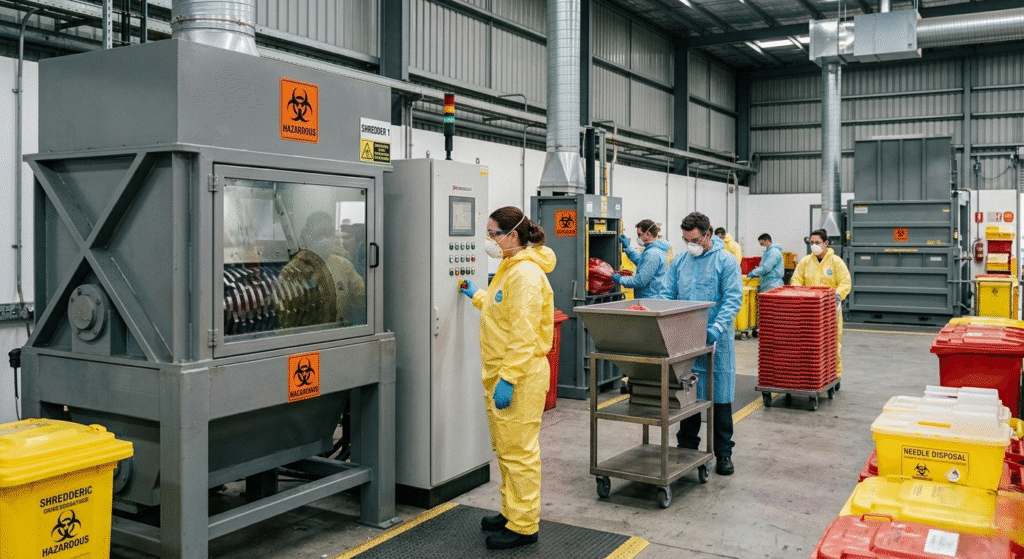
Autoclaving is the common way to treat infectious waste. The waste goes into a room with high-pressure steam that kills all the germs. After it is treated, the waste is no longer infectious. Can be safely thrown away in a regular landfill. This method is effective, widely used, and cleaner than burning.
Incineration is used for waste that includes tissue organs and certain pharmaceutical and chemical waste that cannot be autoclaved. Modern incineration facilities burn at high temperatures and have controls to limit what goes into the air. The result is ash, which is then disposed of as hazardous waste.
Chemical treatment is used for liquid wastes, especially from labs, where special solutions kill the biological agents before the liquid is safely disposed of.
Each method is used for a specific type of waste. Using the wrong method can cause problems and may result in hazardous materials not being fully neutralized.
Step 6: Final Disposal
After treatment, the waste goes to its destination. Treated waste that is no longer infectious usually goes to a landfill. Some of it goes to plants that burn it to make electricity. Certain materials that can be safely recovered go to recycling facilities.
At every stage, from treatment to disposal, records are kept. Regulatory bodies can ask for these records years later, so keeping them is not optional. It is necessary to protect the hospital or clinic.
Medical and Hazardous Waste Management Regulations
Medical waste management in the US is governed by bodies that each cover a different part of the process.
The EPA handles the side, especially pharmaceutical waste. Regulations have been updated, so hospitals and clinics should review their practices.
OSHA protects workers who handle materials. Every hospital and clinic must have a plan to control exposure, which is updated every year. This is one of the common violations found during inspections, and it is easy to avoid.
DOT governs how medical waste is packaged and transported. And state regulations are on top of all of this. Some states are stricter than the requirements. Hospitals and clinics should review their state’s rules.
Best Practices for Disposal of Medical Waste
Knowing the process is one thing. Making it work every day is another.
Staff Training
The best system in the world will not work if staff are not properly trained. Regular training keeps staff current and confident. When procedures change, everyone needs to know.
Proper Labelling and Documentation
Accurate labels and complete paperwork are important. When questions arise about waste records, clear answers should be provided. Taking shortcuts can cause problems later.
Regular Audits and Monitoring
Internal audits help identify problems early. They ensure that bins in storage areas are used correctly, kept clean and secure, and that records match the actual waste being collected. Tracking waste over time also helps identify any issues.
The medical waste disposal process has steps, but with the right support, it is manageable. When waste is handled properly, everyone benefits.
Conclusion
Medcycle makes sure that medical waste is disposed of safely and correctly so that people get healthcare. The medical waste disposal process is complicated. Has a lot of steps, but with the right help, it is not too hard to handle. Medcycle takes care of everything. Collecting the waste, treating it, doing the paperwork, and getting rid of it so hospitals and clinics can focus on taking care of patients instead of dealing with paperwork. When medical waste is handled properly, it is good for everyone.
FAQs
What happens to waste after it is collected?
A special company that has a license to handle waste takes it to a facility where they make it safe. They do this in a few ways. They can use hot steam to clean it, burn it, or use special chemicals to make it safe. They do this to get rid of anything that can hurt people. After they make it safe, the medical waste goes to a place in the ground called a landfill, a place that burns it to make electricity, or a place that recycles things, depending on what kind of medical waste it is.
Why is proper disposal of medical waste important?
If we do not handle waste correctly, it can make people sick, make the soil and water bodies dirty, and hurt the people who touch it. Hospitals and clinics can also get in trouble with the law if they do not follow the rules for getting rid of waste. Getting rid of waste the right way is important for medical waste because it helps keep everyone safe. Medical waste disposal is something that needs to be done carefully to make sure it is done safely and correctly.
Can medical waste be recycled?
Yes, medical waste can be. Made into new things, but only after it has been treated and is safe. Medical waste that has been cleaned with steam can be reused or made into new things. Nothing can be made into new things until it’s been treated.
Who is responsible for handling medical waste?
Everyone who touches waste is responsible for handling it correctly. This includes the people who work in hospitals and clinics, the people who manage these places, the people who pick up the waste, and the people who treat it. No one person is in charge of everything.
What are the different categories of medical waste?
There are different kinds of medical waste, including medical waste that can make people sick, such as sharp things like needles, waste from operations, old medicine, chemicals, and radioactive waste. Each kind of waste has its own rules for handling and getting rid of it.
What color-coded bins are used in medical waste disposal?
Red bins are for waste that can make people sick, yellow bins are for sharp things, blue or white bins are for old medicine, and black bins are for things that are not hazardous. All of the bins need to have labels on them in addition to the colors.
Is Medcycle compliant with medical waste disposal regulations?
Yes, the company follows all of the rules, including the rules from the EPA, OSHA, and DOT, as well as the rules from the state. They keep track of everything they do and provide documentation every time they pick up and get rid of waste.
Why should healthcare facilities choose Medcycle for waste disposal?
Medical waste is a problem. The company takes care of it in a way that follows all of the rules, is reliable, and keeps track of everything so the people who work in hospitals and clinics can focus on taking care of patients and worrying about getting rid of medical waste.