
Handling biomedical waste is a serious responsibility that extends well beyond simple medical waste disposal.
It involves any byproduct of medical, dental, or veterinary work, such as used syringes or contaminated dressings, that poses a risk to human health or the surrounding ecosystem.
Without a rigorous approach to medical waste management, these materials could spread dangerous infections or leak hazardous chemicals into our environment.
Proper disposal isn’t just about following the law. It’s about ensuring that every sharp object and chemical vial is neutralized through specialized treatments like sterilization or incineration.
By maintaining these high standards, healthcare facilities protect their staff and the community from avoidable accidents.
Navigating these complex regulations and safety protocols is much easier with a reliable framework like MedCycle.
What Is Biomedical Waste Management?
Effective medical waste management is about much more than simply discarding waste.
It is a carefully coordinated process of handling, storing, and treating materials from healthcare and research centers.
This includes everything from used needles and infectious cultures to chemical leftovers and radioactive substances.
If these items were handled like standard medical garbage disposal, they could pose a significant threat to public health and the environment.
To keep everyone safe, the process starts with meticulous sorting.
Waste is categorized into specific groups, such as sharps, infectious materials, and chemical waste, ensuring each type receives the correct treatment.
Once collected, it is transported under strict safety guidelines to specialized facilities.
There, methods like autoclaving, incineration, and chemical disinfection are used to neutralize biological threats.
By transforming hazardous waste into a safe, inert form before final disposal, we significantly reduce the risk of accidental infections and environmental contamination.
This systematic approach ensures that the vital work of healing people doesn’t inadvertently harm the planet.
Importance of Biomedical Waste Management
Getting medical waste management right is about much more than just following rules.
It is a vital shield for healthcare workers and the community.
When we treat biomedical waste as just another task for medical garbage disposal, we risk the accidental spread of infectious diseases and the contamination of our soil and water.
Improper handling can expose staff to dangerous pathogens or toxic materials that don’t belong in a standard landfill.
By prioritizing safe collection and treatment, we ensure that hazardous leftovers from clinics and labs are neutralized, keeping both people and the environment healthy.
Types of Biomedical Waste
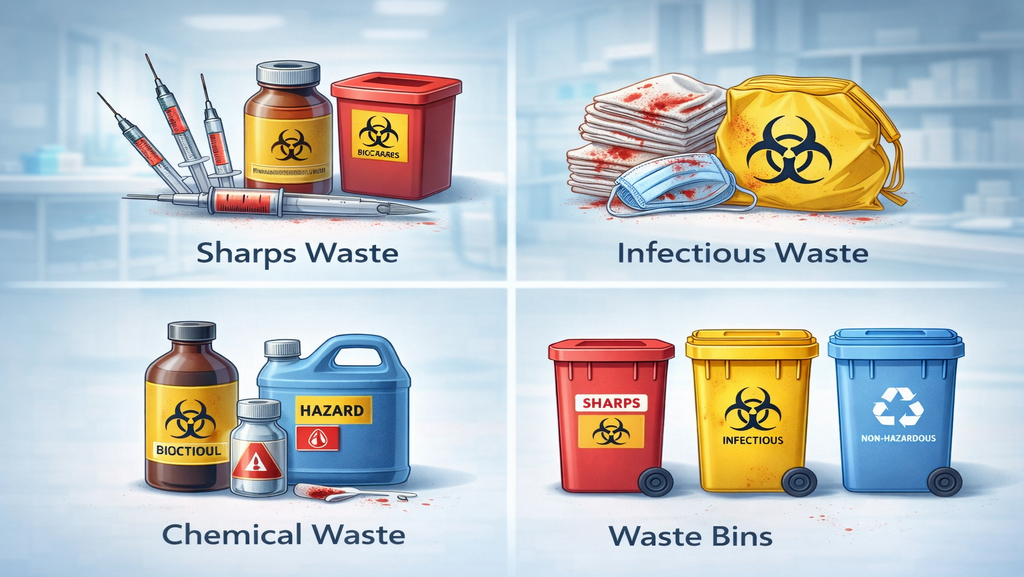
To handle medical waste management effectively, we first need to understand what we are dealing with.
The World Health Organization classifies these materials into eight distinct categories based on where they come from and how hazardous they are.
This system ensures that medical garbage disposal is tailored to the specific risks of each item, whether it’s a used needle or a chemical byproduct.
Proper identification is the first step in keeping healthcare environments safe and sustainable.
Infectious Waste
This category includes materials contaminated with blood, fluids, or other infectious agents.
Because these items can harbor harmful microorganisms like bacteria and viruses, they require strict sterilization or incineration.
Proper handling is essential to prevent the spread of diseases to healthcare staff, patients, and the community at large.
Sharps Waste
Sharps include items that can easily cause cuts or punctures, such as needles, scalpels, and broken glass.
These are particularly dangerous because they can transmit bloodborne pathogens if someone is accidentally poked.
They must be collected in puncture-resistant containers to ensure safe disposal and protect everyone handling the waste.
Pathological Waste
This consists of human or animal tissues, organs, body parts, and blood or other body fluids removed during surgery or autopsies.
Due to both ethical concerns and potential infection risks, this waste must be handled with extreme care.
It usually requires specialized incineration to ensure complete and dignified destruction.
Pharmaceutical Waste
This includes expired, unused, or contaminated medicines, vaccines, and serum.
It is important to dispose of these properly to prevent them from entering the water supply or being misused.
They should never be flushed down the drain, as they can cause long-term environmental damage to our delicate ecosystems.
Genotoxic Waste
This is a highly hazardous material, often including substances used in cancer treatments like chemotherapy drugs.
Because these compounds can damage DNA and cause mutations, they are extremely toxic.
They must be strictly separated and subjected to high-temperature burning to ensure the harmful molecules are completely broken down and neutralized.
Chemical Waste
This category includes various laboratory reagents, disinfectants, solvents, and heavy metals like mercury from broken thermometers.
Chemicals can be reactive, toxic, or corrosive, posing significant risks to people and the environment.
They must be carefully stored and processed by specialized facilities to avoid dangerous spills or toxic reactions.
Radioactive Waste
This waste comes from medical procedures involving nuclear medicine, such as radiotherapy or diagnostic imaging.
These materials contain radioactive isotopes that remain hazardous for a long time.
They are stored in shielded, labeled containers until the radiation decays to safe levels, following strict protocols monitored by specialized safety authorities.
Non-Hazardous Waste
This is essentially general office or household-type trash produced in a medical setting, such as paper, packaging, or food scraps.
While it doesn’t carry a specific health risk, it must still be managed properly to reduce the overall volume of waste sent to landfills and to promote recycling efforts.
The Benefits of Proper Biomedical Waste Management
The benefits of proper biomedical waste management include:
Protecting The Health
When we manage medical waste correctly, we create a safety buffer that shields everyone.
Healthcare staff, patients, and the community all benefit when hazardous materials are contained.
By preventing these items from entering the public space, we ensure that our environment remains a safe, healthy place for everyone to live.
Preventing The Spread Of Infectious Diseases
Proper disposal is a critical defense against outbreaks. Many medical byproducts carry harmful pathogens that can easily spread if mishandled.
By following strict treatment protocols like sterilization or incineration, we effectively destroy these biological threats.
Moreover, we ensure that an infection originating in a clinic does not become a community-wide crisis.
Reducing The Risk Of Contamination Of The Environment
Medical waste can be incredibly toxic to our ecosystem if it leaks into our soil or water sources.
Through careful management and secure disposal methods, we prevent chemical and biological contaminants from polluting the natural world.
This stewardship is essential for preserving clean water and protecting fragile local ecosystems.
Protecting Workers From Exposure To Hazardous Materials
Those working on the front lines of waste handling face significant risks from needle sticks and chemical splashes.
Implementing standardized safety protocols ensures that these professionals can perform their duties without fear of injury or illness.
A well-managed system serves as the primary safeguard for the people who serve us.
Reducing The Cost Of Healthcare
While it might seem counterintuitive, proper waste management saves money in the long run.
By minimizing medical errors, preventing the spread of secondary infections, and avoiding heavy regulatory fines, hospitals can operate more efficiently.
Reducing waste volume through better sorting practices also lowers the overall costs of specialized disposal.
Improving Public Health
Ultimately, managing waste is about the bigger picture of community well-being.
When we control the flow of hazardous medical materials, we contribute to a cleaner, safer society.
This proactive approach strengthens the entire healthcare system, fosters public trust, and ensures that we are all better prepared for future challenges.
How to Properly Manage Biomedical Waste
Several steps can be taken to manage biomedical waste properly. These steps include:
Classification
The first step is to categorize your waste based on its risk level.
By separating hazardous items like biological cultures or sharp instruments from regular office trash, you ensure that high-risk materials get the specialized attention they require.
This foundational step is essential because the treatment method for a used bandage is vastly different from that of a chemical reagent.
Proper sorting prevents cross-contamination and ensures that every piece of waste follows its appropriate safety pathway.
Containment
Once classified, waste must be placed in secure, leak-proof containers.
These vessels are specifically designed to withstand the physical properties of the waste, whether it is liquid or solid.
Using the correct containment prevents spills, splashes, or accidental exposure during storage.
These containers must remain sealed until they reach the treatment facility, serving as the primary barrier between hazardous materials and the surrounding staff or environment.
Labeling
Clear labeling is the cornerstone of safe transport and handling.
Every container must be marked with the specific type of waste it holds and its associated hazard level.
This allows waste collectors to identify exactly what they are dealing with and take the necessary precautions.
Effective labeling eliminates guesswork, ensuring that those handling the items know whether they need protective gear or specialized transport.
This significantly reduces the risk of accidents during the collection process.
Treatment
Before waste can be safely disposed of, it must undergo a treatment process to eliminate its biological or chemical hazards.
This usually involves methods like high-temperature incineration, chemical disinfection, or steam sterilization in an autoclave.
The goal here is to render the waste inert and harmless.
By effectively destroying pathogens and neutralizing toxic substances, treatment ensures that the remaining material can be managed as ordinary waste without posing a threat to public health.
Disposal
The final stage is the secure disposal of the treated materials.
Once the waste has been rendered safe through treatment, it must be moved to an approved, regulated facility, such as a controlled landfill designed to prevent environmental leaching.
This final step completes the management cycle, ensuring that neutralized waste does not re-enter the ecosystem.
Adhering to these final disposal standards is the ultimate commitment to protecting our communities and maintaining long-term environmental health.
Conclusion
Ultimately, effective medical waste management is a collective commitment to safety, ethics, and environmental stewardship.
By adopting a structured approach rather than viewing it as mere medical garbage disposal, we turn a public health risk into a controlled, safe process.
Every step, from classification and containment to treatment, is crucial in protecting our healthcare workers, communities, and planet.
As technology and regulations evolve, using reliable frameworks like MedCycle helps keep our medical facilities safe and healing-focused.
Let’s continue to prioritize these standards to ensure a cleaner, safer, and more sustainable future for everyone.
Frequently Asked Questions
1. Can medical waste be disposed of with regular household trash?
No, definitely not. Medical garbage is essentially distinct from normal office or domestic rubbish. It poses special threats, such as infectious agents, hazardous chemicals, or sharp hazards, which regular garbage-collecting systems are not designed to handle. Attempting to dispose of biomedical items through ordinary channels might endanger the health of garbage workers and pollute the environment significantly. Always adhere to your facility’s protocols for specialized collection and treatment.
2. Why is professional medical waste management more cost-effective in the long run?
Specialized management actually shields your company from much higher costs, despite the fact that it might seem like an extra expense. In addition to lowering the risk of workplace accidents and preventing secondary infections, efficient sorting and handling also help hospitals avoid significant regulatory fines. Additionally, waste stream optimization can reduce the overall amount of hazardous materials, which makes disposal easier and boosts healthcare providers’ overall operational effectiveness.
3. What should I do if an accidental needle stick or exposure occurs?
In the event of an accidental injury, immediate action is critical. First, wash the affected area thoroughly with soap and water; for eye splashes, flush with clean water for several minutes. Report the incident to your supervisor or the facility’s safety officer immediately to initiate the proper post-exposure medical evaluation. Prompt action ensures that you receive the necessary testing or preventative treatment as quickly as possible.
4. How does MedCycle support my facility’s compliance efforts?
For hectic healthcare settings, navigating the complicated web of local and federal regulations can be difficult. These safety procedures are made easier by the dependable framework provided by MedCycle. It aids healthcare facilities in maintaining organization and compliance by offering precise guidelines on classification, labeling, and disposal standards. By ensuring that your employees are aware of their roles, a structured system lowers the possibility of mistakes and maintains the sustainability and safety of your facility.
