📌 Key Takeaways
A professionally designed website improves user experience, strengthens
credibility, enhances SEO performance, and increases conversion rates.
Partnering with Drive Group LLC helps businesses create modern,
mobile-friendly websites that support long-term online growth and success.
Most people don’t think much about medication disposal until they find expired prescriptions, leftover antibiotics, or unused pain medication sitting in a cabinet. The problem is that keeping old medications indefinitely – or throwing them away incorrectly – can create risks for both public safety and the environment.
Fortunately, responsible drug disposal is straightforward when you know the right options. This guide covers safe disposal methods, hazardous medication considerations, and the role proper pharmaceutical waste management plays in protecting communities and waterways.
Best Way to Dispose of Medication
Not all medication disposal methods offer the same level of safety and effectiveness.
Drug Take-Back Programs
This is the best option, no competition. The DEA runs a National Prescription Drug Take-Back Initiative with collection events twice a year – typically April and October – plus year-round drop-off locations at pharmacies, police stations, and hospitals nationwide.
- Accepts most prescription drugs, OTC medications, and many controlled substances
- Medications are incinerated under controlled conditions – nothing reaches waterways or landfills
- Drop-off locations are searchable in under a minute on the DEA’s website
- No paperwork, no appointment, no cost to the patient
Authorized Mail-Back Envelopes
Some pharmacies offer prepaid mail-back envelopes for medications. You seal your pills inside, drop the envelope in any mailbox, and a licensed facility handles the rest.
- Ideal for rural areas where physical collection sites are hard to reach
- DEA-compliant – these aren’t informal arrangements
- Usually available at the pharmacy counter; ask if you don’t see them displayed
At-Home Disposal – When Nothing Else Is Available
When a take-back option genuinely isn’t accessible, the FDA recommends mixing medications with something unappealing before trashing them.
- Mix pills with used coffee grounds, dirt, or cat litter
- Seal the mixture in a zip-lock bag or tied plastic bag before placing in the trash
- Scratch out your name and prescription number on the label – prescription labels are a surprisingly common source of identity theft, and most people never think about that
- This method works for most common medications, but is not suitable for hazardous drugs
The Flush List – Narrower Than You’d Think
The FDA maintains a specific list of medications that can be flushed when no other option exists. These are primarily high-risk opioids where the misuse risk outweighs environmental concerns.
- This list is short and specific – don’t assume your medication qualifies
- Flushing is a last resort, not a convenience option
- If your medication isn’t explicitly on the FDA flush list, don’t flush it
Hazardous Medication Disposal – Not Everything Is Equal
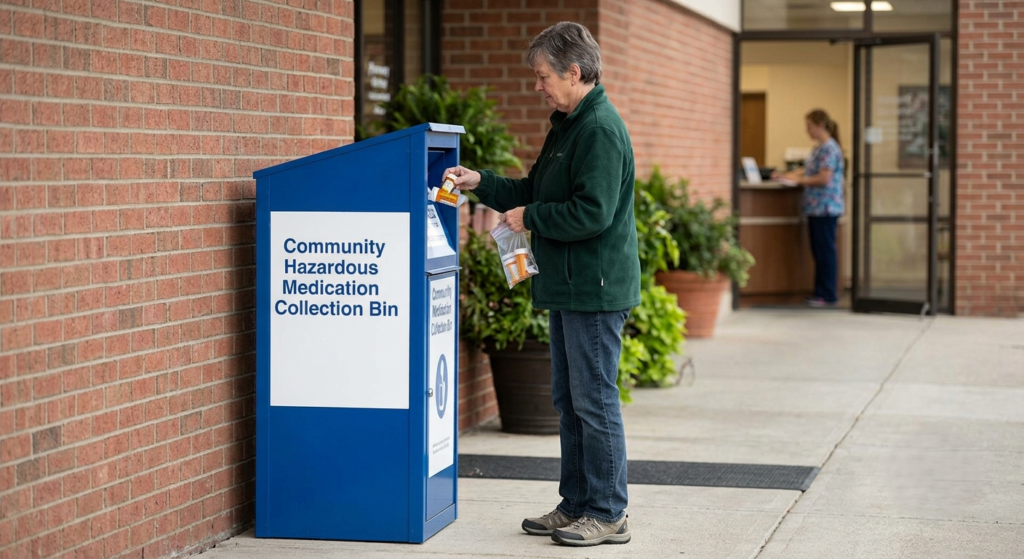
Most people assume that a pill is a pill. In reality, some medications are classified as hazardous waste and require handling that goes well beyond tossing them in a drop box. According to P Market Research, in 2025, the global hazardous drug disposal service market was valued at USD 1.35 billion. It is projected to reach USD 2.22 billion by 2032, growing at a compound annual growth rate (CAGR) of 7.3% during the forecast period.
Which Medications Qualify as Hazardous?
Chemotherapy drugs are the clearest example – many are toxic at very low concentrations and can’t go into regular waste streams under any circumstances.
- Chemotherapy and antineoplastic agents top the hazardous list
- Certain hormone therapies, some antivirals, and select controlled substances also qualify
- At home: return these to your prescribing facility or pharmacy rather than any standard take-back bin
- In healthcare settings: accurate classification is mandatory – the wrong bin means a compliance violation
Why This Classification Matters
Getting it wrong isn’t just an environmental issue – it’s a liability issue. Facilities that misclassify hazardous medications or use improper disposal channels face serious EPA penalties.
- Hazardous pharmaceutical waste requires separate storage, labeling, and licensed transport
- Standard medical waste contractors are not always authorized to handle pharmaceutical hazardous waste
- This is where working with specialists in pharmaceutical waste disposal stops being optional
Pharmaceutical Waste Recycling and Environmental Impact
The word “recycling” here doesn’t mean what most people picture. You can’t melt down a blood pressure pill and repurpose it. Pharmaceutical waste recycling refers to controlled destruction – high-temperature incineration and chemical neutralization that break drug compounds down before they can cause harm.
What Ends Up in the Water
When medications are flushed or improperly landfilled, they don’t vanish. Wastewater treatment plants weren’t built to filter pharmaceutical compounds.
- Traces of antidepressants, antibiotics, synthetic hormones, and painkillers have been found in water systems across multiple countries
- Synthetic estrogens from birth control have been documented to disrupt fish reproduction
- Antibiotic residue in waterways contributes to antibiotic resistance – a problem that loops directly back to human medicine
- These aren’t theoretical risks. Researchers have been publishing on this for over a decade
The Volume Problem
Americans fill billions of prescriptions each year, and a significant portion goes unused. Globally, unused and expired medications contribute to a growing pharmaceutical waste problem. Much of this waste is not disposed of through approved collection or disposal programs, increasing risks to public health and the environment. As a result, effective pharmaceutical waste management has become an essential part of healthcare operations and regulatory compliance.
Regulations and Guidelines for Safe Drug Disposal
The regulatory framework around medication disposal has tightened considerably over the past decade, driven by the opioid crisis and growing environmental pressure.
Federal Oversight
Two agencies share jurisdiction here, and both matter.
- DEA: The Secure and Responsible Drug Disposal Act gave the DEA authority to let patients surrender controlled substances through authorized programs – before this, options were nearly nonexistent
- EPA: Regulates pharmaceutical waste classified as hazardous; facilities generating this waste must meet specific storage, labeling, and transport requirements
- Hospitals, clinics, pharmacies, and long-term care facilities all fall under these rules – non-compliance isn’t treated lightly
State Rules Add Another Layer
Individual states layer additional requirements on top of federal standards.
- California’s Pharmaceutical and Sharps Collection Program requires manufacturers to fund and run take-back programs statewide – several other states have adopted similar models
- Some states have stricter definitions of hazardous pharmaceutical waste than federal standards
- For healthcare organizations, understanding How to Handle Pharmaceutical Waste Disposal means navigating both federal and state requirements simultaneously – and those requirements don’t always align neatly.
Role of Pharmacies in Responsible Drug Disposal
Pharmacies see you at the start of a medication’s life when you pick it up. They’re increasingly showing up at the end too.
In-Store Drop Boxes
Major chains like Walgreens and CVS have installed medication drop boxes in many locations, often partnered with local law enforcement.
- Secure, locked collection containers – not just a bin behind the counter
- Collected and transported by DEA-registered handlers on a regular schedule
- Accepts most medications, though policies vary slightly by location
- For anyone already making a pharmacy run, dropping off old medications at the same time is about as frictionless as it gets
The Pharmacist Conversation Most People Skip
Ask your pharmacist what to do with leftover medication. It’s a completely normal question, and they’re trained to answer it.
- Most patients never ask – they go home with leftover pills and deal with it “later”
- Later usually means never, which is how medicine cabinets turn into time capsules
- A one-minute conversation at the counter can save you a lot of guessing
For organizations needing comprehensive medical waste management solutions – from classification and collection through final destruction – working with a licensed specialist removes the regulatory guesswork entirely.
Conclusion: Ensuring Responsible Drug Disposal for Health and Environment
None of this is particularly complicated. What it requires is changing a habit. The default behavior – leave it in the cabinet, flush it when it expires, toss it in the trash – isn’t harmless. It has real effects on water quality, public safety, and drug misuse rates.
The fix: find your nearest take-back location, check your medicine cabinet twice a year, and ask your pharmacist when you’re unsure. For healthcare facilities, pair that with proper pharmaceutical waste management systems and the professional support to stay compliant.
Small shift. Consistent result than most people expect.
FAQs
How do I handle hazardous medication disposal at home?
Chemotherapy drugs and similarly toxic medications should go back to the prescribing facility or pharmacy – not into standard take-back bins. If you’re unsure whether something qualifies as hazardous, call your pharmacist. They’ll guide you through this.
Can I throw away old medicines in household trash?
For most common medications, yes – mix them with coffee grounds or cat litter, seal the bag, remove your personal info from the label, then trash it. But take-back programs are always the better option, and some medications should never go in the trash at all.
Are all medicines treated the same in hazardous medication disposal?
No. Standard medications and hazardous pharmaceuticals require completely different handling. Chemotherapy agents, certain hormone therapies, and some controlled substances fall under stricter EPA rules. Healthcare facilities need accurate internal classification systems to stay on the right side of compliance.
What happens to medicines collected through disposal programs?
DEA-registered collectors transport them to licensed facilities where they’re incinerated at high temperatures. The process is documented through chain-of-custody records from pickup to destruction – considerably more rigorous than anything involving your trash can.
How often should I check and dispose of old medicines?
Twice a year. The DEA’s national take-back events in April and October make convenient reminders. It takes about ten minutes to clear a medicine cabinet, and it’s one of those tasks that feels surprisingly satisfying once it’s done.
Why should I choose MedCycle for drug disposal?
MedCycle handles end-to-end pharmaceutical waste disposal for healthcare facilities, pharmacies, and clinics – from proper classification through licensed destruction with full documentation. For organizations that need to stay compliant without managing it in-house, MedCycle handles the entire process.